
W-Sitting: What Parents Need to Know
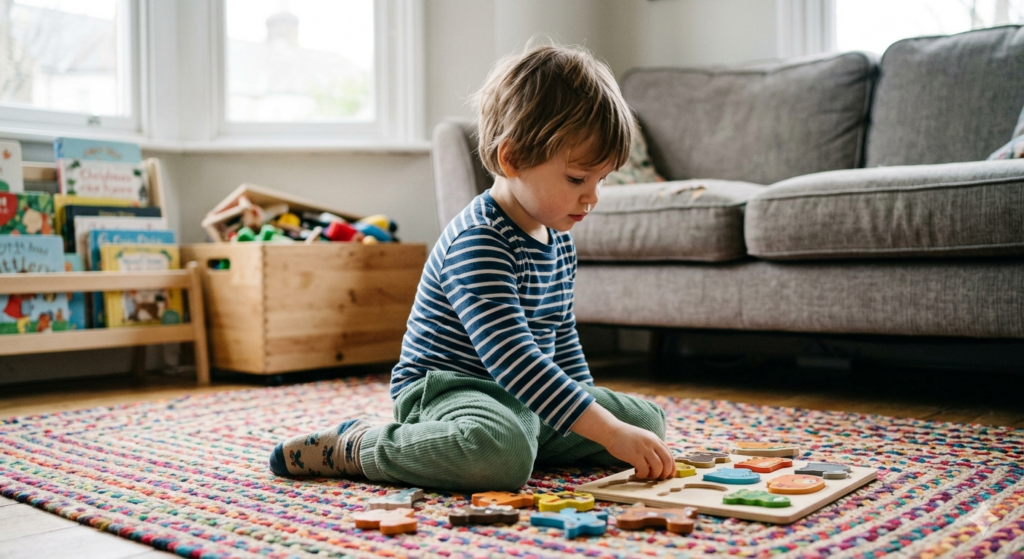
If you’ve ever noticed your child sitting on the floor with their knees bent and feet tucked out to the sides—forming a “W” shape—you’re not alone. This position, known as W-sitting, is very common in young children. As occupational therapists, we get asked about it all the time.
What Is W-Sitting?
W-sitting is when a child sits on their bottom with their knees bent in front of them and their feet positioned outside their hips, creating a “W” shape.
Why Do Kids W-Sit?
Children often choose this position because:
- It gives them more stability
- It requires less core strength
- It feels comfortable and familiar
Is W-Sitting Bad?
Occasional W-sitting is not a problem. However, if it becomes a child’s preferred or constant position, it may impact development over time. From an occupational therapy perspective, frequently sitting like this can affect:
- Core strength
- Balance and coordination
- Posture
- Ability to rotate the trunk (important for play and later skills like writing)
- Using both sides of the body together
- Crossing Midline
When Should Parents Pay Attention?
You may want to monitor it more closely if your child:
- Almost always sits in a W position
- Has difficulty sitting in other positions
- Seems a bit clumsy or off-balance
- Avoids reaching across their body
- Tires easily during play
What Can Parents Do?
Parents can help by encouraging other sitting and play positions. These positions could include criss-cross, side sitting, tall kneeling, and long sitting (legs straight out.) It is also beneficial to keep practice fun and encouraging to the child. Parents can build strength through play with activities such as climbing at the playground, crawling games, obstacle courses, playing on hands and knees, and sitting on small chairs of stools. Gently prompting your child with cues such as “fix your legs” with a light, encouraging tone can help guide your child.
When to Seek Support
If W-sitting is frequent and paired with other concerns (like delays or coordination challenges), an occupational therapist can help assess underlying skills and provide simple, effective strategies. W-sitting isn’t something to panic about—but it’s something to be aware of. Think of it as a small signal that your child may benefit from building strength and stability.