
Early Literacy: Reading, Writing, Learning

Early language and literacy set the foundation for success in school. For this reason, parents must foster these skills early.

What We Know About Early Literacy

Language and literacy develop at the same time, and development begins in the first three years of life. Thus, children gain extensive knowledge of language, reading, and writing well before they enter kindergarten. A child with limited language or literacy exposure will have greater difficulty learning to read and write.

Early Literacy is Not Early Reading

Infants and toddlers do not develop literacy through formal instruction, nor is formal instruction at this age appropriate. A child develops literacy through literacy-rich experiences and parent encouraged literacy behaviors.  Therefore, you can foster early literacy behaviors by:

  • Allowing your child to hold books, turn pages, and yes, even chew on books
  • Encouraging your child to attend to pictures – Locate a favorite picture, point to familiar objects in a picture, and imitate actions in a story
  • Helping your child recognize print as meaningful by pointing to print as you read, moving from left to right
  • Providing your child with pencil/crayon to scribble (write), not just color – Letters will not be legible at this age.
  • Singing nursery rhymes or doing action rhymes
  • Reading to your child nightly – Reading is easily incorporated into a bedtime routine. It can be five minutes or less. You do not have to read the words to tell the story, but you can talk about the pictures or sing the story.

Books Young Children Like

Infants 0 – 6 Months

  • Books with large, simple pictures with bright colors
  • Stiff cardboard, chunky books
  • Cloth and soft vinyl books with pictures of people or familiar objects

Infants 6 – 12 Months

  • Board books with photos of other babies
  • Brightly colored cardboard books to touch and taste
  • Books with familiar objects, such as balls and bottles
  • Plastic and vinyl books for bath time
  • Washable cloth books to mouth

Young Toddlers 12 – 24 Months

  • Sturdy board books that they can carry
  • Books with photos of children doing familiar actions, such as sleeping, eating, or playing
  • Goodnight books for bedtime
  • Books about saying hello and good-bye
  • Books with only a few words on each page
  • Animal books
  • Books with a predictable story

Toddlers 2 – 3 Years

  • Books that tell simple stories
  • Books about numbers, alphabet, shapes, sizes
  • Simple rhyming books that a child can memorize
  • Books about animals, vehicles, food, playtime
  • Books about favorite TV characters

So, by focusing on the first three years of life, we provide children with the building blocks for language and literacy development. For links to studies on how early childhood literacy positively impacts success in school, check out United for Libraries. Also, for ideas to encourage early language, click here.

Lazy Summer or Deconditioning?

DeconditioningThe weather is hot, the gym is closed, and you’ve been relaxing – enjoying the lazy, hazy days of summer. Taking a day off here and there is no problem. However, if you’ve been consistently missing your regular run, bike ride, or gym session, you might notice some aches and pains showing up. As a result, you could have the beginnings of deconditioning.

Deconditioning explained

Exercise creates many changes in your body. For instance, the heart begins to pump blood more efficiently. Your muscles use oxygen more efficiently, and they contract in a more coordinated manner. Your body gets more efficient turning food into fuel, just to name a few. Deconditioning is the reversing of these changes. Exercise is a “use it or lose it” kind of thing. Deconditioning is the process by which we “lose it.”

How long does it take to decondition?

As with most things related to a system as complex as the human body, it depends. According to the ACSM, two weeks without exercise can lead to significant loss of cardiovascular fitness. Two to eight months of detraining can erase virtually all of your gains. As you detrain, cardiovascular fitness tends to decline first, with muscle strength declining later.

Other factors are your age and your exercise history. If you’re younger, you’ll probably lose fitness at a slower rate than someone older. If you’ve been consistently exercising for a long time, or at a high intensity, your losses will probably be slower than for someone who just started.

Reversing the losses

If you’re just undergoing a period of increased time commitments at work or with family, using a shortened exercise routine can help minimize your losses. Even one session a week will help you keep most of what you’ve gained. Other options are to use shorter but more intense interval training sessions, or breaking up your activity into multiple short chunks during the day. If your layoff was longer, it may take just as long to retrain as it did to make the gains initially.

If you’re having those aches and pains due to inactivity or need help designing a safe program to either maintain your fitness or gain it back after a layoff, your physical therapist can help. Injury and illness are other common reasons for detraining. Your PT can help you recover faster. And, they can also find activities to maintain your fitness while safely working around an injury or illness. To learn a little more about deconditioning and dysfunction during these crazy times, check out this article here.

Return to School

Return to School

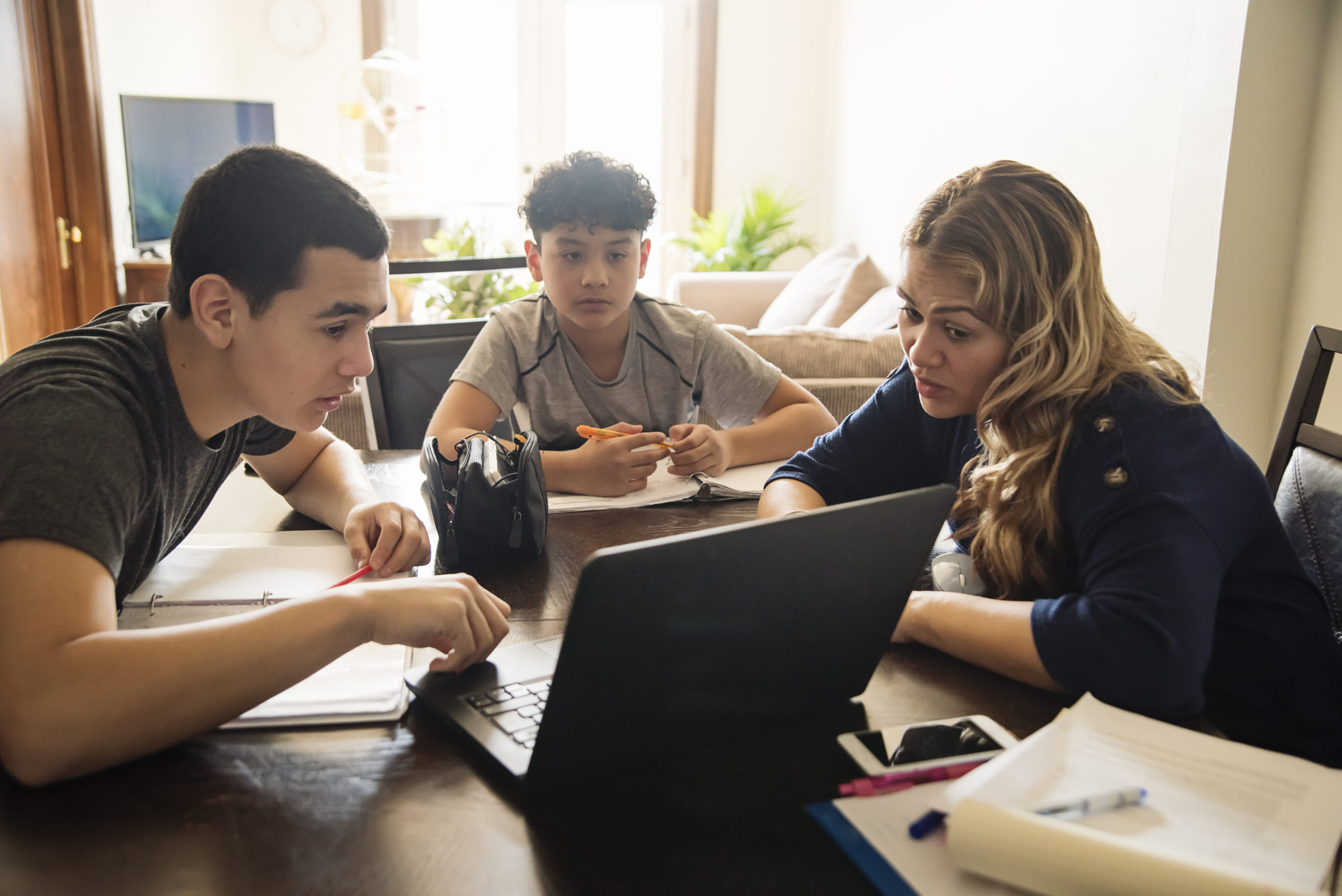
Return to school? Ready to return to school?? I myself am nervous and troubled!!! I am concerned that my son’s education is not being treated as a priority, and I will not be enough in supporting him. At the onset of COVID-19 I, like so many, got a taste of what my child’s learning looked like. For him, his poor behavioral control (due to online context and being at home) kept us from getting work done. Tears, shouting, and frustration was my daily life, and we were both at a tipping point. Thankfully, we made it to summer and welcomed the break but now here we are with more uncertainty. I don’t know that I am looking forward to the fall. But I can say that I am grateful for my profession. Because of it, I have been able to make some changes for my son for the better.

What is Your Role?

I realized a few things through the meltdowns. My role in my child’s education is being his cheerleader; supporting his efforts and also being his “sounding board” by supporting his social-emotional skills. Therefore, I began drawing on my OT training. I started implementing “interventions” that I knew would support his behavior in order to support the education challenges. I am happy to see his emotions becoming more mature even when given
challenges. I encourage all of us parents to figure out what “role” we want to play in our children’s experiences.

How Can MOSAIC Help with Return to School?

In addition, I want parents to know that we are here for you. If you find you have questions or concerns about behaviors or learning challenges, or you recognized that your child needed more support during this time, we might be the help you are looking for. Your first thought might be how would physical, speech, and occupational therapy help in my child’s learning and with the current gaps in education provision? I am here to tell you that each of these therapies address learning and support education efforts; from help in PE participation to spelling/reading issues or simple management of time and organization. Additionally, we have specialized training in learning disabilities, learning challenges, dyslexia, ADHD, and emotional skill development (social skills and behaviors).

If you have found yourself following links on Facebook, looking up things on the internet, and trying to take on more by creating activities by yourself, please reach out to our clinic. We would love to answer any questions and be of more help to our community. As one member of our Mosaic community told me recently; having a weekly therapy session was the most helpful thing in creating reassurance that the child was continuing to make progress even when school wasn’t fully in session.

Here are some common issues that you might be concerned about:

  • Firstly – Learning barriers may include inattention, lack of confidence, unable to self-initiate work
  • Secondly – Executive function difficulties include attention, emotional control, working memory, planning, organization, self-monitoring, and time-management
  • Thirdly – Emotional challenges may include increased reactivity, depressed behaviors, reduced social skills, reduced motivation

In addition, if you are looking for activities to work on with your kids, here are some great science experiments you can do at home.

Summer Scavenger Hunts

Can you think of anything better than a warm summer Montana day? The long days and warm weather make for great opportunities to explore the outdoors with your children by organizing summer scavenger hunts. The Gallatin Valley has no shortage of trails and rivers to discover. Going on outside adventures with your children is also a fantastic and fun way to work on language skills (without your kids even knowing they are working!). Being in nature is a great way to learn about the weather, seasons, plants, and animals. Summer scavenger hunts are a great activity because you can have your kids find literally anything.

It doesn’t have to be a huge ordeal to setup. In fact, it can be as simple as writing a list of five things to look for while you are out. Scavenger hunts can promote vocabulary development, understanding of basic concepts, following directions, etc., and your kids will have a blast hunting for “treasures” while they are out with you. It can also promote conversations with you and your children when you talk about what they found.

Summer Scavenger Hunt Ideas

Here are some ideas from simple to more complex things that you can search for on your next hunt:

  1. Find leaves from three different trees or bushes (this will help to teach number concepts and you can talk about what the leaves look like or how they feel).
  2. Find something rough, smooth, bumpy, etc. (this helps teach concepts and also works on descriptive vocabulary).
  3. Something that rhymes with sock (or any word to work on rhyming).
  4. Look for an animal that moves quickly/slowly/hops/flies, etc.
  5. Find something orange/purple/brown, etc. (to work on color concepts and understanding).

In addition, if you feel like getting more creative, your scavenger hunt can have a theme. You can search only for things you’d find around the river, a camping related scavenger hunt, or go on a bug hunt. If your children are older you could even have a night time scavenger hunt where you have to use flashlights or search for stars. The possibilities are really endless.

But What If We Can’t Get Outside?

I love exploring nature and being outside, but what makes scavenger hunts so great is you can set one up anywhere. Going to the grocery store (lets find something purple, something sour, and something that smells sweet). A cold, rainy day? Let’s have an around the house scavenger hunt. Find something fuzzy, something warm you can drink, and something you need if it’s raining.

Online Resources

If you need more ideas, there are a ton of resources and free printables online. The Must Have Mom has several simple bingo like scavenger hunt printables suitable for young children. The EdVenture blog also has a list of free scavenger hunt printables for every month. If you don’t want to put together your own hunt, a simple internet search should help you find exactly what you are looking for.

Do you already love taking your kids on scavenger hunts? If so, what are some of your favorite scavenger hunt activities? Here are some great resources for even more ideas to keep your kids busy this summer!

Growing up Montana Style

Growing Up Montana StyleI remember growing up Montana style. I would ride my bike on the dirt hills, bring garter snakes home in my water bottle, catch butterflies, and try to hatch fish eggs in my swimming pool. To my parents’ chagrin, the garage resembled a small zoo of bugs, arachnids, reptiles, and all kinds of science experiments. I did what every other boy in the neighborhood was doing, but I was even cooler being a girl. I was the classic definition of a “tomboy” and I loved every minute of it.

Fast Forward 30+ Years (gulp)

Today I am raising two spunky and rambunctious boys in one of my favorite places in the world, where I can indulge my childhood memories and make new ones with them. My oldest is nine and is an incredible cross country and downhill biker, skier and snowboarder, and can play the piano with little effort. My youngest is six and loves music, is crazy laid back, and swims like a fish.

Outside and Screens

Both boys are at home in the outdoors, though I have somewhat forced it on them to encourage interest in things other than technology, since this is what they seem to be wired for. It is like an addiction, I’ve decided, as they often ask for it as soon as they wake up in the morning. I try to push them out the door on nice days and set limits on screen time, yet an argument or even bargaining often ensues. Technology, I’m sure you’ve heard it a million times, is wonderful yet the bane of my existence, especially since COVID-19 took hold. Never have my children yelled, stomped their feet, and slammed doors because I haven’t let them go outside. But, limit time on the iPad or not allow them to watch some YouTuber explain how to play Minecraft, and they think the world is going to end.

Finally, Montana Style Summer

June 11th was one of the happiest days this year. It meant the “home school” year was over and technology induced learning could finally end! Now that summer can commence, all that screen time is tucked neatly away in a closet for a rainy day. I know there will be arguments, mean words spat at me, and possibly even tears with my refusal of screen time, but they need to play. I mean it, really learn to play, problem solve, discover that “boring” is a mindset, and enjoy just being kids. Maybe they will thank me some day and fondly recall the things they got to experience as boys being raised in Montana.

Growing Up Montana Style Activity Ideas

As most of us are doing staycations or exploring where we live due to COVID-19, here are some things I have enjoyed doing with my kids:

  • Camp in the back yard
  • Explore a new trail
  • Create a bug collection
  • Find paw prints and create plaster molds
  • Catch frogs or anything in a creek, river, or lake
  • Learn to fly fish
  • Hunt for shells or fossils
  • Visit a ghost town
  • Make your own ice cream
  • Plant a vegetable garden
  • Create science experiments out of household items (with parent supervision, of course)
  • Visit a town in Montana you have never been before
  • Make a picnic
  • Walk around your neighborhood
  • Plant flowers
  • Run through the sprinklers
  • Have a water balloon battle
  • Sleep on the trampoline

In addition, check out Run Wild My Child and MOSAIC’s Science Experiment page for more great ideas!

Kegels are Not the Answer for Everything

Kegels

There is a common myth going around in regard to pelvic floor dysfunction: “Isn’t it all about Kegels?”

First, let’s start with defining the pelvic floor. The pelvic floor refers to layers of muscle that span the bottom of the pelvis. The pelvic floor’s job is to:

  1. Support pelvic organs
  2. Help with urinary and fecal continence
  3. Help with sexual performance
  4. Stabilize the pelvis
  5. Aid with lymphatic and venous flow

Our pelvic floor is just like any other muscle in the body. It can contract, relax, get tight, or get weak!

What are Kegels?

Kegels are another term for a pelvic floor contraction. They are common to do when your pelvic floor muscles are weak. They have been prescribed frequently for those who have incontinence (accidental leaking of urinary or bowel movements) or pelvic organ prolapse (when one or more pelvic organs drop or press into the vagina), but they are not actually the answer for all incontinence or prolapse issues. Here’s why: when muscles are weak, we strengthen them, but not all muscle dysfunction and pain is a caused by weakness! It wouldn’t be effective to strengthen the whole muscle, especially if it’s tight! Just think: if you held your arm up all day, you wouldn’t be strengthening your shoulder muscles but rather making those muscles tired.

It’s Not Just About Strength

In addition, our pelvic floor is a part of our core which is also made up of our diaphragm, transverse abdominus (deep abdomen muscles), and our multifidi (deep back muscles). All these muscles need to work together to function at their best. Think about a can of soda (or pop or cola, whatever you call it!): before you open it, it has the perfect amount of pressure where it is not vulnerable to be crushed, but when it is opened it becomes vulnerable for injury.

This can be the same for our core. If there is an imbalance of weakness or muscles not working properly, our muscles are vulnerable. They can be overworked, become weak, or get tight. If you have an imbalance, it could mean that your pelvic floor could be affected, overworked, or weak! Making an appointment with a women’s health physical therapist at MOSAIC can help find any imbalances that you may have contributing to your pelvic symptoms.

Research shows that only 60% of participants correctly performed a Kegel when asked. Forty percent did not perform a correct Kegel, and of those, 25% displayed a urinary incontinence promoting technique. With these numbers, you have another good reason to make an appointment with a physical therapist trained to address women’s issues. Check out another MOSAIC article to learn more about the pelvic floor and “peezing”.

Kegels aren’t just for women. If you are a man and having similar issues, read this article from the Mayo Clinic to learn more.