
Social Emotional Regulation and Learning

Emotional RegulationMany people may not know that occupational therapists have fairly extensive backgrounds and training in addressing social-emotional regulation and learning. Therefore, we implement many of the techniques you have likely seen on Pinterest or from your school counselor. During this time, I am happy to share with you my top techniques that I am found doing daily with kids in the clinic.

Firstly, I have included the age ranges I use these with to help guide you. Secondly, I should also say that these are what I call grounding or filler techniques, available to support us and our kids when we see something in our children but just aren’t sure how to help.

What are we looking to do? Above all, we are looking to help children learn to work with and through their emotional shifts. If you see mood shifts or changes in behavior this can indicate a shift in arousal. Behavior shifts can be subtle. My son rocks, other children reduce eye contact.

Why do we look at arousal? Because it reflects our nervous system and our ability at any one moment to manage our situation. The more we learn to work within our emotions (versus stopping or ignoring) the better our nervous systems can support us, and we can learn and feel better).

Hands Off

1 year and up: Bubble blow with a pause – Try to only blow out one bubble. As the bubbles fall to the ground, focus on one and try not to let it pop.

3 years and up: Using only one hand, touch the pads of each finger to thumb in a rhythmic pattern: I have been taught to say positive words or a statement with each finger touch. For example: “Happiness is in me,” or “I will feel great.” Whatever statements resonate with your child. Repeat until you feel more calm.

4 years and up: Ground with the senses: I often have kids look around the room and tell me what they see. After looking around for a while and then running out of things to say, I have them take a deep breath and then move on to the other senses. I don’t push for more answers. I accept what they have and then move on to encourage flow.

1) See 2) Hear 3) Feel 4) Smell

Hands On

Does social distancing apply to your children???

I caught myself trying to protect my son when I came in the door the other day and instead probably increased his fear by explaining away why we couldn’t hug. UGH!! What a terrible feeling. After showering and feeling better about my state of hygiene, I sat with him for a long time and just hugged him. I think we can always show our children our power to be more available and open to change, we just need to give ourselves time to make a game plan. I skip the explanation now and ask him just to give me a minute.

Placement of your hands over a child’s hands to produce comfort is very effective. Holding body parts to send comfort or compassion include holding a hand gently over front of head, then gently over heart, and then over stomach. Take deep breaths with each hand placement. Again, repeat until calm.

With sincere hope you all are well!

Miss Erin

For another OT perspective on parenting, check out this article


Picky Eater or Problem Feeder?

Picky Eater or problem feederDoes your child have problems eating? Is mealtime stressful? Do you know if they are a picky eater or a problem feeder? Pediatric therapists get this question often and, as a result, have tried to come up with an answer. The consensus after lots of classes, trainings, research, and conversations with families and other health care professionals, is that a picky eater is just that, an eater. A picky eater eats food with family and follows typical social routines without physical or behavioral difficulties. A problem feeder is a problem because they show negative patterns surrounding meals and the process of eating.  

Reasons Why a Picker Eater and a Problem Feeder are Different

First of all, a child can be labeled a problem feeder and not a picky eater for a number of reasons. These reasons lead to stress and problems around mealtime and can include: 

  • Discomfort and pain can lead to a child’s resistance to eat. Medical causes, such as reflux, allergies, food intolerances, and constipation need to be ruled out because they can prevent progression with eating.
  • Poor movement of the mouth and tongue can cause problems feeding. Oral movement can include tongue control and chewing and follows a pattern. When the pattern is not met then the skill is considered immature. Immature oral skills can lead to problems with feeding.
  • Similarly, motor skill development also follows a pattern. Head control, core strength, and sitting posture support oral motor skills. Lack of motor skills can cause impaired oral motor skills and lead to problem feeding.
  • The sensory system is part of the nervous system. It includes vision, hearing, touch, taste, smell, and balance. Because of this, the sensory system needs to be checked to determine its ability to perceive and interpret information. This ability follows a sequence of intensity. Atypical eating patterns and routines can occur when a child perceives tastes or textures at an intensity that interferes with eating.
  • While kids learn many positive things from their environment, environmental and social influences can lead to learned behaviors that interfere with a child’s feeding habits and routines. These behaviors can create problems with family’s mealtime routine and have big consequences.

MOSAIC Can Help!

Successful eating/feeding is an involved process, therefore, often requires a team to fix the problem. MOSAIC can help you determine whether your child is picky eater or a problem feeder because our skilled therapists specialize in feeding. They will answer any questions you have and discuss your concerns. Most importantly, MOSAIC’s therapists have completed additional education and training on feeding and can fully support a child and their family.

Above all, pediatric occupational and speech therapy at MOSAIC can help with feeding at any age!

Additional Resources:
SOS Approach to Feeding>>>
Get Permission Approach to Feeding>>>

Birth to Five Language for Real Life

Parenthood can be hard, and toddlers can make it even trickier. It’s not always easy to sit down and have structured time to expose kids to vocabulary and educational concepts, particularly in those early years. The good news is, there is an easier way! As speech therapists, part of our job is to teach parents how to incorporate critical language exposure in day to day activities, especially from birth to five. The first step, put down the technology. Yes, even those apps that claim to be educational. Your child is going to learn more by being included and involved in daily activities. So, what does that look like?

How to Incorporate Birth to Five Language Ideas

Narration

Your best friend is narration. I mean talk – a lot. Predictable, repeated exposures are how children gain vocabulary with context. Flashcards, for example, may show a child an apple in one depiction, but the understanding increases when they are able to observe this same word across multiple sizes, shapes, and environments. Label what you’re putting in the grocery cart or what they’re looking at down the aisle in the store. Keep it simple, one to three words, “yummy, apples!” or “you see balloons!”

Birth to five language

Use play kitchen materials. Let them practice cutting an apple while you do the real thing across the counter. Toys don’t have to stay in the play room. Imitation of actions and sounds, “crunch, crunch!” are critical prelinguistic skills required for later verbal language. Talk about what you’re doing while you cook dinner, and they are impatiently circling your feet (or more likely, yelling at your feet). Narrate that too! “It’s so hard to wait… I hear that you’re hungry”. You’ve now exposed your child to emotion vocabulary, provided recognition of their feelings, introduced an early expectation of waiting, and opened the possibility for them to use words over reactions in the future. With repetition, they may start expressing that “hungry” feeling verbally instead of behaviorally.

Have Them Help

Help with the laundry. Help with the cooking. It may be messy, and it may take longer, but including children is going to keep them entertained and give them opportunities for language and communication. Can they guess what comes next for the lunch menu? Can you send them to get the apples from the fruit bowl? Doing this allows them to practice following directions, prepositional concepts, and early vocabulary, and hey – there’s that word “apple” again in a new representation. Sometimes helping is hard for kids, like those dreaded toy baskets. This is when you, as the parent, can model the behavior and communicate your expectations.

Children learn by observing. Get on the floor and clean up with them. Sing a clean up song. As it is repeated and used across environments, children may anticipate and begin to imitate. Give them choices, such as who gets the blocks versus the cars and request that they make a selection with a gesture or word. Again, you’ve just opened the possibilities for more communicative functions of language: requesting, negotiating, accepting and denying choices, labeling, and identifying locations, all while tidying up a room.

Expectations For Birth to Five Language

Know that even young children are capable of high expectations. This will, of course, vary based on your individual household, but expectation is a building block to good communication. Have an older sibling help a younger one wash their hands while you finish up dinner. They’re gaining exposure to sequencing, turn taking, and social skills. At the dinner table, serve a meal family style a few nights a week. Put all of the food in the middle or off to the side. Increase the communicative expectation by having children request what they want.

For a younger child, this may look like modeling the word “more”, waiting for an imitation, or even using sign language to express this need. For a preschool child, you can expand their utterance length by modeling “more apples” or “want chicken, mom” before adding it to their plate. Words like “please” and “thank you” are often loved by parents. However, they don’t have much meaning and don’t help us to recognize what a child really wants or needs as early communicators. Try to keep it concrete – the manners can come later.

MOSAIC Can Help!

Language development doesn’t have to feel like work. Speech therapists work together with parents every day to incorporate communication into play and functional activities. If you have concerns about how your toddler is reacting to your narration in daily activities, their ability to follow routine directions, or their imitation of rehearsed vocabulary talk to a speech therapist. A free screen to a speech therapist may give you more information about additional evaluation needs or supports/ideas to try – no doctor’s visit or referral required! Remember, parenting is hard enough, teaching your child to communicate doesn’t need to be!

Click here to learn more about speech, language, and hearing development from birth to five from the American Speech-Language-Hearing Association. 

Play: Our New Year’s Challenge

Parents: Participate in floor play time for 15-30 minutes a day with each child.

PlayJust like that, another year has gone by. Our challenge to you in 2020 is to get down on the floor and play with your child for 15 minutes of uninterrupted, technology free, one on one time, every day.

Life gets busy, we know it, but in as little as 15-30 minutes, you are supplying your growing child with quality speech, language, sensory, and motor opportunities critical to their development. Therefore, take away the distractions of the TV, phone, and tablet, push those battery powered toys away and focus on the interaction between you and your child. It doesn’t have to be hard, and it doesn’t have to be fancy. Here are some easy ideas to try:

Play Ideas

Kids Under 1:

  • Make faces and silly sounds back and forth. Watch their imitation!
  • Play predictable, repetitive games such as peek-a-boo or “ready, set, go” and see their anticipation grow each opportunity.
  • Play on different textures to improve balance and sensory exploration.

Preschoolers:

  • Practice those turn taking skills that can be so tricky in the classroom. Model vocabulary surrounding moments that may be frustrating, to support those times in later day to day activities.
  • Play with balls to practice throwing or kicking. Then, watch their coordination improve.
  • Explore outside, even in the snow – there are many sensory experiences in the changing textures and temperatures.
  • Play pretend with blocks, cars, dolls, or kitchen items. It’s certainly okay to be silly!
  • Create an obstacle course with things around the house.

School Age:

  • Play simple card games to target visual and cognitive demands.
  • Play board games. Teach each other the rules or make up your own version.
  • Hide and go seek and tag are great ways to get active.
  • Ride bikes, go for a walk, or jump rope.
  • Build with LEGOs.

Great for All Ages:

  • Read with your child.
  • Look at a picture book and create your own story.
  • Do art projects and explore your creativity, while letting them get messy.
  • Have a dance party.
  • Let your child help in the day to day. For example, cook a meal together, bake some cookies, or allow them to help with the laundry.

Removing technology is impossible, so making sure you have even a small amount of quality time with your children every day will do wonders for them (and you). Screen time is an inescapable reality today, but there is strong research that too much screen time can have serious health consequences. Click here to learn more about screen time and setting limits, and check out Common Sense Media for age appropriate recommendations.

Gift Ideas that Support Development

Whether it’s the upcoming holidays, a birthday, or your child just needs something new to hold their attention, choosing toys that promote learning are a great way to help your child build skills through play. Try to stay away from toys that light up and make a lot of noise. And remember, kids need a model to learn, so make sure to get down on the floor, show your child how to play with the toy, and engage in back and forth activity. Here are some gift ideas that our therapists recommend:

Gift Ideas for Building Gross Motor Skills

gift ideasUnder 1 Year

  • Oball – Helps to build arm and grasp strength while encouraging reaching in an easy to grab toy
  • Tunnel – Helps build strength in the arms and encourages cross body movement through crawling
  • Push Toy – Helps build core and leg strength, develops balance, and encourages standing and walking

Gift Ideas for 1-3 Years

  • Ride on Toys – Helps develop balance, coordination, and strengthens core and leg muscles
  • Balls – Any size or sport will help develop hand eye coordination

gift ideas

3-5 Years

  • Rody – Helps develop balance, coordination, and strengthens core and leg muscles
  • Balance Bike – Helps develop balance, coordination, strengthens core and legs muscles, and is a great first step to learning how to ride a bike

Gift Ideas for Building Fine Motor Skills

Under 1 Year

  • Empty/Fill Toys
  • Soft Blocks
  • Textured Balls
  • Activity Bars/Tables

1-3 Years

  • Nesting Cups/Stacking Rings
  • Blocks
  • Shape Sorter

gift ideas3-5 Years

  • Puzzles
  • Coloring Books and Crayons or Washable Markers
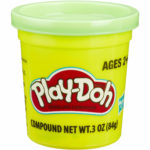
  • Play-Doh

Gift Ideas for Building Speech & Language Skills

Under 1 Year

  • Mirror
  • Books

1-3 Years

  • Bubbles
  • Baby Dolls

3-5 Years


Pumpkin Sheet Cake Recipe

pumpkin sheet cakeThis pumpkin sheet cake recipe is easy to make and delicious.

Makes 36 Servings

For the Cake:

  • 2 Cups Sugar
  • 1 Cup Vegetable Oil
  • 2 Cups Solid Pack Pumpkin
  • 4 Extra Large Eggs
  • 2 Cups All Purpose Flour
  • 2 Teaspoons Baking Powder
  • 1 Teaspoon Baking Soda
  • ½ Teaspoon Salt
  • 1 Teaspoon Ground Ginger
  • 2 ½ Teaspoons Ground Cinnamon
  • 1 Teaspoon Ground Cloves
  • 1 Teaspoon Ground Nutmeg

For the Cream Cheese Frosting:

  • 3 Ounces Cream Cheese, Softened
  • 6 Tablespoons Butter, Softened
  • 1 Tablespoon Whole Milk
  • 1 Teaspoon Pure Vanilla Extract
  • 3 Cups Powdered Sugar

In a large bowl, beat eggs, oil, and sugar until well mixed. Then, add pumpkin and mix thoroughly. Meanwhile, in a separate bowl, mix together flour, baking powder, baking soda, salt, cinnamon, ginger, cloves, and nutmeg. After that, gradually add dry ingredients to pumpkin mixture. Mix until smooth. Finally, pour mixture into greased and floured 11”x17” jelly roll pan. Bake at 375 degrees for 20 minutes or until wooden pick inserted into the center comes out clean. Cool completely before spreading on the cream cheese frosting.

In medium bowl, beat cream cheese until soft. Add butter, mixing until smooth. Stir in milk and vanilla. Gradually add powdered sugar. Beat until smooth. Spread onto cooled cake. Enjoy!

For ideas on how to have your kids help you make this pumpkin sheet cake, check out our Cooking with Kids blog.