Is Toe Walking Really Idiopathic?

Toe walking, or walking on the balls of the feet, can occur during the toddler years. Some kids will grow out of this without intervention. Toe walking alone is not necessarily a cause for concern. However, if it does not resolve, it can become a habit that, if left untreated, will cause physical changes that can be difficult to treat. And while toe walking in a 2 year old girl might seem cute, in a 10 year old boy it could lead to difficulty participating in sports, teasing, and impairments of the musculoskeletal system.

Causes of Toe Walking

  • Achilles tendon (heel cord) or hip flexor tightness
  • Sensory system impairments – vestibular, visual, proprioceptive, tactile
  • Spasticity or increased muscle tone (seen in kids with cerebral palsy)
  • Abdominal/hip/knee weakness
  • Increased lumbar lordosis (increased spinal curve)

Treatment For Toe Walking

  • Exercises to strengthen/educate weak or underused muscles, especially the tibialis anterior
  • Stretching to lengthen muscles that have become tight, including muscles of the hip, knee, and ankle
  • Core stabilization to increase strength of the abdominals, hips, and improve the position of the lumbar spine
  • Gait training to work on proper heel strike
  • Balance training
  • Bracing
  • Taping
  • Sensory integration interventions to provide the stimulation that the child is lacking, seeking, or avoiding
  • Visual motor exercises to help the eyes work together
  • Education
  • In severe cases, serial casting or surgery to increase tendon/muscle length

When to See a Physical Therapist

If you have concerns regarding your child’s toe walking, a physical therapist can screen or evaluate them and recommend an individualized plan of care based on the child’s needs. In general, if your child is a toe walker, you should immediately try to address it at home. Encourage them to walk with “heels down,” “flat feet,” “not on tiptoes,” or with a “heel-toe” pattern. Do not use a jumper and avoid using a walker or an exersaucer if your child cannot touch the floor with feet flat on the ground. The sooner you notice and address toe walking, the quicker it will resolve with or without intervention from a physical therapist.


Motor Milestone Series: Sitting

sittingMost babies will learn to sit without help by the age of 8 months. There are several activities that you can work on with your baby to facilitate independent sitting. You baby should be able to hold their head up independently when their trunk is supported to start these activities. This is typically around 3-4 months of age. All  activities should be supervised with enough support given to prevent your baby from falling.

  • Support your baby at the hips only while he or she is sitting on the floor. Your baby should try to hold their chest off of their legs at a 30° angle or more. As their strength improves, he or she should be able to keep their trunk upright to 90° with support at the hips. Use a Bumbo or with supervision to work on trunk  control. Do not use Bumbo on an elevated surface, like a counter.
  • Have your baby sit using only pillows or a Boppy (as seen in the picture) for support while having them reach in front and overhead for toys. Have your baby sit without support with your hands on their hips. Remove your hands but keep them close by to catch your baby before they fall.
  • When your baby can sit still without help provide them with toys to play with while sitting.
  • When your baby can sit and play with a toy without falling, place toys further away from them so they have to reach to grab the toy and return sitting. Place toys to the left, right, and in front up to 12” away.
  • When your baby can sit without help, grab toys placed on the ground, and return to sitting without falling, start to work on dynamic balance. Have your baby practice sitting on soft surfaces like a pillow and play with toys.
  • When your baby can sit on soft or unstable surfaces without falling, start working on seated balance reactions. Gently push to the side, forward, and backward. Make sure you push slowly so that you give them enough time to adjust their balance and maintain sitting. If you push too fast or too hard, your baby will not be able to adjust quickly enough and will fall.

Always make sure to celebrate the small successes, and make it fun! If your baby isn’t crawling, they might benefit from a physical therapy evaluation. Contact MOSAIC Health & Rehab to schedule a free screen or to set up an evaluation. Check out Gross Motor Milestones: Crawling to learn what your child should develop next. To learn more, check out this great milestone moments list from the CDC.

Motor Milestone Series: Rolling

rollingIn our new Motor Milestone Series we will discuss how parents can help facilitate activities through play. Rolling is typically the first major gross motor milestone that parents look forward to. Therefore, it’s the activity we will explore in this newsletter. As with all milestones, the age at which your child will start can vary widely. Additionally, rolling happens in multiple steps and typically occurs  between 2 and 5 months of age. The 3 stages we will explore today are: rolling from side to back, from back to side, and from back to stomach.

Rolling From Side to Back

Firstly, place your child on his or her side. Shake a rattle or other toy that makes noise above and behind their head. Start by gently rolling your child onto their back until they begin to initiate the movement independently.

Back to Side

Use toys on one side to encourage rolling to the side. Likewise, make sure your baby can reach for a toy across their body using both hands. To help, bring one knee over the other and your baby should continue the roll without help. If they don’t, have them hold onto your hand to help pull themselves the rest of the way. You can also try using a small wedge to help gravity assist your baby with rolling. Once your baby can roll side to back and back to side, you are ready to work on rolling back to stomach.

Rolling From Back to Stomach

Continue to use bright or noisy toys to motivate your child to complete the activity. Start with the toy to one side. Place child on back. With knee bent, bring one leg up and across stomach over opposite leg to begin roll. Allow child to roll over on side and then onto stomach.

For all rolling, make sure you practice to both the right and left sides. Always celebrate the small successes, and make it fun! If your baby isn’t rolling by 6 months of age at the latest, they might benefit from a physical therapy evaluation. Contact MOSAIC Health & Rehab to schedule a free screen or to set up an evaluation. Check out Gross Motor Milestones: Sitting to learn what your child should develop next. To learn more, check out this great milestone moments list from the CDC.  

20 Healthy New Year’s Resolutions for Kids

Picture1

Preschoolers  

  • I will clean up my toys and put them where they belong.
  • I will brush my teeth twice a day, and wash my hands after going to the bathroom and before eating.
  • I won’t tease dogs or other pets – even friendly ones. I will avoid being bitten by keeping my fingers and face away from their mouths.

Kids:  5- to 12-years-old

  • I will drink milk and water three times each day, and limit soda and fruit drinks to once each day.
  • I will apply sunscreen before I go outdoors on bright sunny days. I will try to stay in the shade whenever possible. I will wear a hat and sunglasses, especially when I’m playing sports.
  • I will try to find a sport (like soccer or an activity (like playing tag, jumping rope, or riding my bike) that I like and do it at least three times a week!
  • I will always wear a helmet when bicycling.
  • I will wear my seat belt every time I get in a car. I’ll sit in the back seat. I will use a booster seat until I am tall enough to use a lap/shoulder seat belt.
  • I will be nice to other kids. I’ll be friendly to kids who need friends – like someone who is shy, or is new to my school.
  • I will never give out personal info on the internet. (Name, home address, school name, or telephone number) Also, I will never send a picture of myself to someone I chat with on the computer without my  parent’s permission.

 Kids, 13-years-old and up

  • I will eat at least one fruit and one vegetable every day, and I will limit soda to one glass daily.
  • I will take care of my body through physical activity and nutrition.
  • I will choose non-violent television shows and video games, and I will spend only one to two hours each day (at the most) on these activities.
  • I will help out in my community through volunteering, working with community groups or by joining a group that helps people in need.
  • When I feel angry or stressed out, I will take a break and find smart ways to deal with the stress, such as exercising, reading, writing in a journal or discussing my      problem with a parent or friend.
  • When faced with a difficult    decision, I will talk about my choices with an adult whom I can trust.
  • When I notice any of my friends struggling or engaging in risky    behaviors, I will talk with a trusted adult and attempt to find a way that I can help them.
  • I will be careful about whom I choose to date, and always treat the other person with respect and without coercion or violence. I will expect the same good    behavior in return.
  • I will resist peer pressure to try drugs and alcohol.
  • I agree not to use a cell phone or text message while driving and to always use a seat belt.

Reproduced with permission from the American Academy of Pediatrics


Topics in Speech & Language Pathology – Speech Sounds

Picture1

Speech Sound Errors

Most children make speech sound errors as they grow and mature. Children learn speech sounds and gain control of those sounds at different stages of development. It is when the errors continue past the typical age range, a child may have a speech sound disorder.

The Role of the Speech Therapist

A Speech-Language Pathologist (SLP) has to make several considerations when analyzing speech. Two specific areas are where a sound is made (place) and how it is made (manner). Sounds are made using the tongue, lower jaw, lips, teeth, alveolar ridge (the bumpy part behind your front teeth), hard palate, and velum (back of the roof of the mouth). One example of manner is plosives, where a buildup of pressure occurs in the mouth.  Another example is stridents, when air is forced through the mouth resulting in friction. Plosives consist of the sounds p, b, t, d, k, and g, and stridents are f, v, s, z, “sh”, “th”, j and h.

Examples of Sound Errors

One error you may hear from your child is substitution of a  strident for a plosive; for example an “h” sound for a “t” sound.  The placement for “h” occurs as air passes over the relaxed tongue, and “t” occurs when the tip of the tongue touches the bony part behind the teeth and then the tongue is released and air is pushed out. Another example is when a child substitutes a plosive for a strident; for example saying a “p” sound for an “f” sound.  Air is forced through the lips with short bursts of air for “p”. Where as the lower lip and upper teeth are used for “f” with a continuous flow.

Techniques Speech Therapists May Use

As each child is different, speech therapy is tailored to a child’s unique learning style and their type and severity of speech sound production errors. Some techniques may include:  looking in a mirror, watching a model by a therapist, using a tactile cues for placement, and repetition.  Speech sounds take years to develop often requiring mastering one sound in order to make another.

If you have any concerns about your child’s speech, please call us for a free speech and language screen.


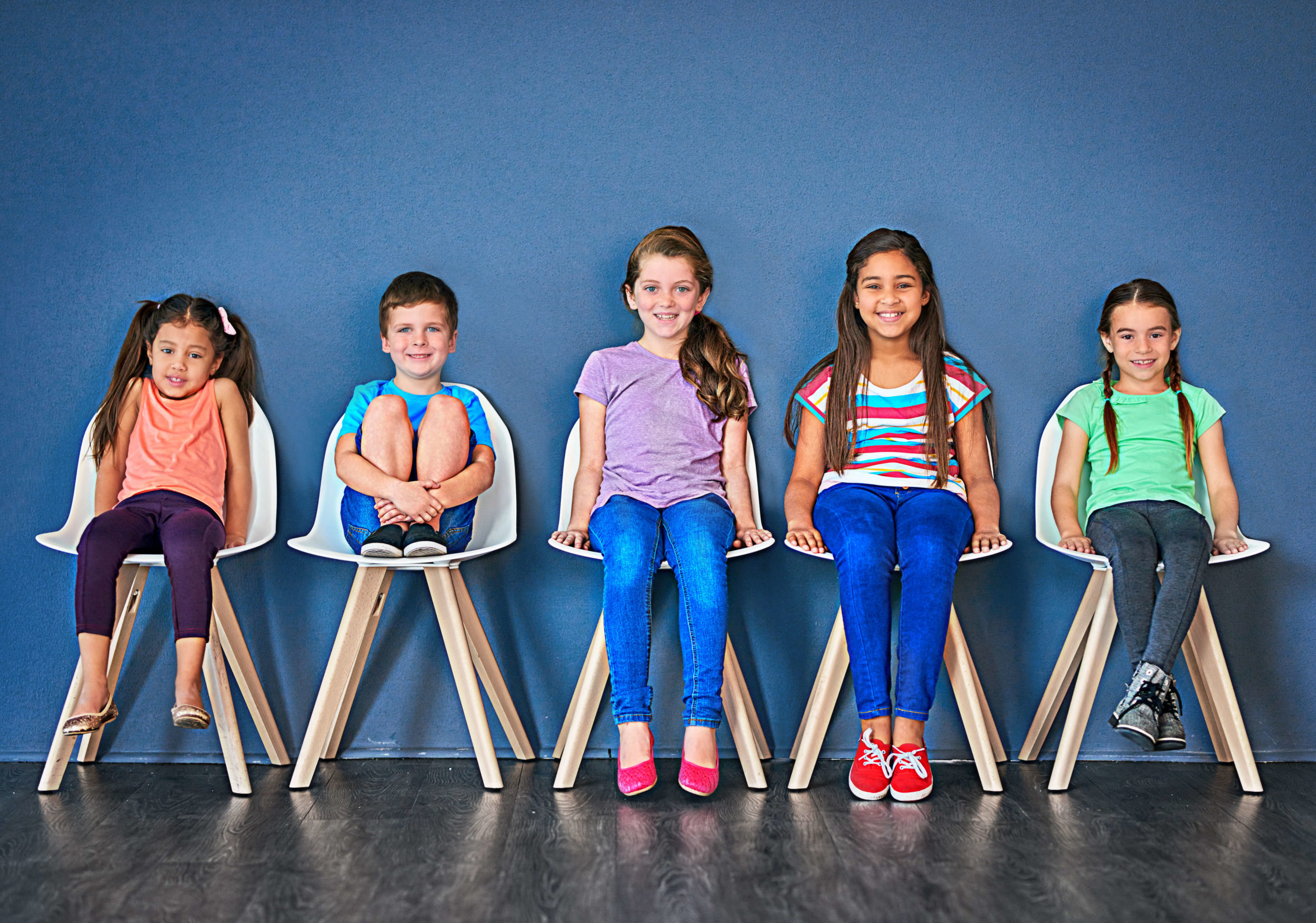
Ensuring Good Waiting Room Etiquette

The Struggle of Waiting Rooms

Doctor’s appointments with family members in tow are often a dreaded obligation. As a result, doctors’ office waiting rooms are consistently filled with patients and loved ones who are anxious, nervous, and bored. This especially includes children. Most waiting rooms are strategically equipped with toys and treats to appease children of all ages. However, a trip to the doctor can be stressful. Consequently, children might misbehave.

Inappropriate Waiting Room Behaviors

  • Blocking or playing in front of the door
  • Climbing on furniture
  • Lacking acceptable manners such as please and thank you
  • Using an inappropriate voice level
  • Being disrespectful of and/or not putting away toys
  • Being disrespectful of others’ space

Addressing Behaviors

In order for parents to avoid a situation in which it is their child who is ruining the collective calm, experts recommend that these behaviors are first addressed in the comforts of the home. James Lehman, MSW proposes that “good behavior is not magic,” and that the “three most important skills for children to learn as a foundation for good behavior are: how to read social situations, how to manage emotions, and how to solve problems appropriately.”

Teaching children the basics of good  behavior can help them learn to be in control of their impulses. It also helps them  as to understand how to behave when in public places and around other people.  Appropriate learned behaviors will also be particularly useful for a child when playing with friends, attending school, and interacting at future jobs. However, learned behaviors take time and require practice to change.

Ideas to Prevent Behavioral Issues in Waiting Rooms

  • Using active supervision and leading by example.  Kids will be kids but when left on their own, good behavior often turns bad. As a parent you are responsible for your child and what he or she is doing.
  • Understanding that the wait could be longer than anticipated and that bringing snacks and familiar toys, activities, and comforts is helpful for attention diversion.
  • Being aware that the environment is small and planning on bringing toys and activities that will not be disruptive.
  • Ensuring that a child is not left alone in the waiting room for longer than necessary by dropping them off and picking them up within a tight window of time

The waiting room at MOSAIC can be a great opportunity to practice these skills outside of the home and get feedback if you are having trouble working through any of these behaviors. We are child and family friendly with trained therapists able to offer advice or answer questions.

Lehman, J. (2013). Good behavior is not magic – it’s a skill. Empowering Parents. Retrieved from http://www.empoweringparents.com/Good-Behavior-is-not-Magic-Its-a-Skill-The-Three-Skills-Every-Child-Needs-for-Good-Behavior.php