Getting Kids Involved with Chores: A Guide for Parents

As parents, we often find ourselves overwhelmed with the never-ending list of household chores. Wouldn’t it be great if we could get our kids involved and lighten the load? Teaching children to contribute to household tasks not only helps them develop important life skills but also instills a sense of responsibility and teamwork. Here are some practical tips for getting your kids involved with with chores and to make it a fun and rewarding experience for the whole family. 

Start Early and Set Clear Expectations

Introduce age-appropriate chores from a young age. This could include simple tasks like putting away toys or setting the table. It could also include feeding the family pet or loading the dishwasher. Clearly explain what is expected of them. Explain why their help is important. Make it a positive experience. Praise their efforts and offer rewards or incentives for a job well done.  

Make it Fun and Engaging

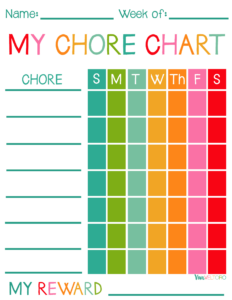
Turn chores into a game or a challenge. For example, set a timer and see who can tidy up their room the fastest. You could also play some upbeat music while doing laundry. Use colorful charts or stickers to track their progress and create a sense of accomplishment. Encourage creativity by allowing them to choose their own cleaning tools or design their chore routine. 

Lead by Example

Children learn by observing, so be a role model when it comes to household tasks. Show them that chores are a normal part of daily life and something to take pride in. Involve them in your own cleaning routine and let them see the satisfaction that comes from a clean and organized home.  

Rotate and Share Responsibilities

Assign different chores on a rotating basis so that each family member gets a chance to experience a variety of tasks. This not only prevents boredom but also promotes a sense of fairness and equality. By sharing responsibilities, children learn the importance of teamwork and cooperation.  

Celebrate and Appreciate

Acknowledge and appreciate your child’s efforts regularly. Whether it’s a simple “thank you” or a small reward, positive reinforcement goes a long way in motivating children to continue contributing. Celebrate their achievements by having a special treat or outing to recognize their hard work. If you feel like involving your child in chores may increase some negative behaviors, we also have a great blog post with some simple ways to decrease behaviors.

Getting kids involved with chores is not only beneficial for parents but also for the overall development of children. By starting early, making it fun and engaging, leading by example, rotating responsibilities, and showing appreciation, you can create a positive chore culture in your home. Remember, the goal is not just to get the chores done but to instill lifelong habits and values that will serve your children well into adulthood. So, roll up your sleeves, involve your kids, and transform chore time into a bonding and learning experience for the whole family. Check out For Modern Kids for more tips on how to get your children more involved around the house.

Downloadable chore charts

Bilateral Integration

Bilateral integration, more commonly referred to as bilateral coordination, is the coordinated and fluid movement of both sides of the body. Bilateral integration requires both hemispheres of the brain working together to enable bilateral movements. Kids who have difficulty with bilateral coordination may appear clumsy, drop things often, switch hands during tasks or use primarily one hand. Development of bilateral coordination skills is necessary for functional skills including self-feeding, handwriting, sports, dressing, grooming, and many other self care tasks. 

What are the Different Types of Bilateral Integration?

Bilateral coordination is made up of three main components, symmetrical movements, alternating movements, and dominant hand/ supporting hand movements. Symmetrical movements are when both hands are doing the same thing at the same time. Some examples of symmetrical movements include jumping rope, jumping jacks, and catching a ball with two hands. Alternating movements use the two extremities in alternating motions. Some examples of alternating movements include riding a bike and marching. Dominant hand/non-dominant hand activities require the participant to use one hand to perform a task while the other assists. Some activities that require this skill are lacing cards, coloring, and tying shoes.

Why is Bilateral Integration Important?

Bilateral coordination is required for a variety of skills. The ability to use both dominant and non-dominant hands in activities indicates a maturation of the brain which is very important for motor planning and visual motor skills. Difficulties with bilateral coordination can lead to difficulty in the classroom including skills such as using scissors, tracing, writing, buttons, managing lunch containers, and turning the pages of a book.

How Can You Help Develop these Skills?

Occupational therapy can help your child develop and improve their bilateral coordination skills. There are also many activities you can try at home to practice this skill in a fun way. Playing with play dough is a good tool for bilateral coordination. Encourage your child to roll the dough into a snake with two hands, roll it flat with a rolling pin, or roll it into a large ball with two hands. Zoom ball is also a fun way to practice this skill. Your child can open and close their arms symmetrically to make the ball zoom down the string. Many dressing activities also incorporate bilateral coordination. Some to try at home include zipping up a jacket, buttons, lacing, and tying shoes.

Aquatic Physical Therapy: The Science Behind the Water

Aquatic physical therapy involves performing exercises and activities in water, usually a heated pool. Aquatic physical therapy can have lots of benefits for people with conditions like arthritis, back pain, fibromyalgia, osteoporosis, neurological disorders, sports injuries, and more. Let’s DIVE IN and explore some of the advantages of aquatic physical therapy.

Aquatic Physical Therapy Reduces Weight Bearing

One of the main benefits of aquatic PT is that it reduces the impact and stress on the joints and muscles, thanks to the buoyancy of water. When submerged, you feel lighter and more supported, which allows you to move more easily and comfortably. Your therapist can use different depths of water to change how much force you experience. For example, when the water is up to your neck, you only bear about 10% of your body weight. This can be especially helpful for people who have difficulty walking, standing, or exercising on land due to pain, stiffness, or weakness.

Aquatic Physical Therapy Uses Built-In Resistance

Another benefit of aquatic physical therapy is that water provides natural resistance. You’ve felt this if you’ve ever tried to move your arm or leg quickly underwater, or run in a pool. Water resistance can be adjusted by changing the speed, direction, or surface area of the movement. There is also equipment like hand webs, water weights, and kickboards that can make movements more challenging. Resistance training can help increase muscle strength and endurance, as well as improve blood circulation and heart health.

Compression

A third benefit of aquatic therapy is the hydrostatic pressure. This is the force that water exerts on an object, which increases with depth. If you’ve ever dove to the bottom of a deep pool and felt pressure on your body or in your ears, this is what caused it. The pressure of the water can be used to help reduce swelling in joints or tissues. The pressure of the water also gives your brain more input about the position your body and limbs are in. This can help improve proprioception, or the sense of where your body parts are in space. Improving proprioception can help enhance balance, coordination, and stability.

Heat

Our last benefit of aquatic PT is that it takes advantage of the warmth of the water, which can help relax the muscles and relieve pain. Warm water stimulates nerve endings in your skin, which can help block pain signals. It also dilates the blood vessels, which can increase blood flow and oxygen delivery to the injured or affected areas. Lastly, warm water can also have a calming effect on the mind and body, which can help you feel better. 

Aquatic PT can reduce the impact and stress on the joints and muscles, provide resistance and hydrostatic pressure, and use the warmth of the water to reduce pain while improving strength, endurance, proprioception and function. Aquatic physical therapy can also be fun and enjoyable. If you are interested in aquatic physical therapy, talk to your doctor or physical therapist to see if it is suitable for you.

Sled Safely: The Benefits of Winter Play for Children

Sledding is a holistic and enjoyable activity for children, seamlessly blending fun and therapeutic advantages. Beyond the sheer joy of sliding down snowy hills, this age-old winter pastime actively promotes the physical development of young adventurers. This winter activity offers a break from indoor routines, encouraging outdoor play in the refreshing winter air. But, it’s important to know how to sled safely in order to prevent injuries from occurring.

Sledding Benefits

Leg Strength and Endurance: Sledding requires children to use their legs to push off or navigate the sled, promoting the development of leg muscles. The effort to climb back up the hill provides an excellent workout, enhancing both strength and endurance.

Core Engagement: Balancing on a sled demands core strength, as children instinctively engage their abdominal and back muscles to maintain stability. This constant core engagement contributes to the development of a strong and stable core over time.

Coordination and Balance: Steering and maneuvering a sled down a hill involve complex motor skills. As children learn to coordinate their movements, they enhance their overall balance and develop a better sense of spatial awareness.

Gear Up to Sled Safely

Choose appropriate gear to prevent injuries:

  • Opt for a winter sports helmet for optimal head protection; a bike helmet is better than none.
  • Also, bundle up in warm clothing, including a hat, gloves or mittens, snow pants, winter jacket, and snow boots, but avoid scarves.

Choose a Safe Sledding Spot & Sled Safely

Pick a suitable location for sledding and stay safe:

  • Firstly, choose a hill with a moderate slope and a flat area at the bottom for a safe glide to a stop.
  • Avoid hills near streets, parking lots, trees, fences, or other hazards.
  • Check the sledding path for bumps, rocks, poles, or trees.
  • Ensure a responsible adult is present in case of any injuries.
  • Sit face-forward on the sled with feet downhill to prevent serious head injuries.
  • Keep arms and legs within the sled.
  • If a sled won’t stop, roll off it.
  • Lastly, walk up the side of the hill, leaving the middle open for other sledders.

So, now you know all the tips and tricks sled safely, find a hill and go! You can check out more sled safety tips from Kids Health.

Role of the Occupational Therapist

The role of the occupational therapist is to enable people of all ages to participate in daily living. Occupational therapy intervention uses everyday life activities or occupations to promote health and well-being. It focuses on the things you want and need to do in your daily life. But what are occupations? Occupations are various kinds of life activities in which individuals, groups, or populations engage. Occupational therapy focuses on nine main occupations.

Role of the Occupational Therapist for Activities of Daily Living

Activities of Daily Living (ADLs) – Activities oriented toward taking care of one’s own body. These activities are fundamental to living in a social world. They enable basic survival and well-being. They include bathing, toileting, dressing, swallowing/eating, feeding, functional mobility, personal device care, personal hygiene and grooming, and sexual activity.  

Instrumental Activities of Daily Living (IADLs) – Activities to support daily life within the home and community. These often require more complex interactions that those used in ADLs. These include care of others, care of pets, child rearing, communication management, driving and community mobility, financial management, health management and maintenance, home establishment and management, meal preparation and cleanup, religious and spiritual activities and expression, safety and emergency maintenance, and shopping. 

Other Roles of the Occupational Therapist

Health Management – Activities to help clients with chronic conditions maintain and improve performance in other occupations. These include symptom and condition management, medication management, and social and emotional health promotion and maintenance. It also includes communication with the healthcare system, personal device management, nutrition, and physical activity management. 

Rest and Sleep – Activities related to obtaining restorative rest and sleep to support healthy, active engagement in other occupations. These include rest, sleep preparation, and sleep participation. 

Education – Activities needed for learning and participating in the educational environment. These include formal and informal personal education participation. 

Work – Activities related to labor or exertion to make, construct, manufacture, form, fashion, or shape objects. These are committed occupations that are performed with or without financial reward. These include employment interests and pursuits, employment seeking and acquisition, job performance, retirement preparation and adjustment, volunteer exploration, and volunteer participation. 

Play – Activities related to any spontaneous or organized task that provides enjoyment, entertainment, amusement, or diversion. These include play exploration and play participation. 

Leisure – Activities that are non-obligatory that are intrinsically motivating and not time based. These include leisure exploration and leisure participation. 

Social Participation – Activities promoting involvement in a subset of occupations that involve social situations within community, family, peer or friend.  

What About a Child’s occupations?

For a child, their main occupations consist of eating, sleeping, toileting, learning, socializing, and arguably one of the most important childhood occupations, play. Play is the foundation for so much development. So, children are exposed to social interactions, praxis and multi-step tasks, fine motor skills, gross motor skills, and self-regulation skills. Therefore, as occupational therapists, it is our job to help children build an adaptive response to an ever-changing environment by integrating skill into play. This becomes important for keeping a child engaged and for creating neural pathways in the brain through motivating activities.

Occupational therapy can help children and adults become more independent in occupations when there is a gap in skills needed to successfully complete these tasks. If any of these occupations are difficult to complete independently for you or your child, then an occupational therapist can help evaluate and assess those skills in greater depth. Occupational therapy can help people of all ages and abilities break down these daily tasks and build functional skills. Or, they can adapt the task itself so that people can be as independent as possible in these crucial activities we do every day. For more information visit Pathways or the OT Toolbox.

Importance of Mealtime Routines for Children

Mealtime routines have changed over the course of the years. It seems like life is busier and we are always wanting to find quicker and easier ways to accomplish everything on our “to do” list. But, the importance of mealtime routines for children should not be overlooked.

Mealtime routines can be an important role in a child’s overall well-being and development. Beyond just providing nourishment, these routines offer a multitude of benefits that can positively impact a child’s physical, mental, and emotional health. So, exactly how do mealtime routines in children contribute to your child’s overall growth and happiness?

Importance of Mealtime Routines to Reinforce Healthy Eating Habits

Perhaps the most obvious benefit is that mealtime routines provide an opportunity to establish and reinforce healthy eating habits in children. By setting regular meal and healthy snack times, parents can help their children develop a sense of structure and consistency. This routine ensures that children are getting the necessary nutrients they need and prevents them from skipping meals or relying on unhealthy snacks throughout the day. It also encourages a balanced diet, as children become accustomed to having a variety of food groups in each meal. 

Teaches Table Manners and Social Skills

Mealtime routines are an excellent way for teaching children essential table manners and social skills. By consistently practicing good manners, such as using utensils, chewing with mouths closed, and waiting their turn to speak, children learn proper etiquette. They also learn how to engage in conversation, take turns, and listen actively. These skills are not only valuable during mealtime but are also transferable to other social settings. This contributes to their overall development and success in life.

Enhances Cognitive Development

Research suggests that regular mealtime routines can enhance a child’s cognitive development. Sitting down for a meal without distractions, such as television or electronic devices, allows children to focus on their food and engage their senses. Without the distractions of electronics, mealtime promotes a child’s awareness of various tastes, textures, and aromas. Additionally, family mealtime conversations stimulate language development, vocabulary expansion, and critical thinking skills. This leads us to what may be the most important contribution that mealtime routines can provide for children, family bonding!

Importance of Mealtime Routines for Family Bonding

Mealtime routines offer a unique opportunity for families to come together and bond. Sitting down for a meal as a family allows for open communication and the sharing of experiences. It provides a chance for parents to connect with their children, ask about their day, and engage in meaningful conversations. This quality time strengthens family relationships. It creates a sense of belonging and security for children, which is crucial for their emotional well-being. 

When considering these factors, it helps define how mealtime routines are more than just a time to eat. The importance of mealtime routines mean an opportunity for children to develop healthy habits, bond with their family, learn social skills, and enhance their cognitive abilities. By establishing consistent mealtime routines, parents can provide a nurturing and supportive environment that promotes overall well-being and sets the foundation for a healthy relationship with food. Today is a great time to prioritize mealtime routines. Create lasting memories and positive experiences for our children, which in turn, can be passed down to the next generation!