Head Shape: Why Worry?

Why do physical therapists worry about head shape? Plagiocephaly, the condition where a baby’s head becomes flattened on one side, is not simply a cosmetic issue. It can impact various aspects of a child’s development, including gross motor skills, strength, speech, feeding, handwriting, and balance, if not addressed.

Gross Motor Development

Plagiocephaly is often linked to torticollis, positional preferences, limited neck range of motion, and asymmetric neck strength. Without intervention, this asymmetry can persist and affect not only head shape but delay or negatively influence overall movement patterns (rolling, crawling, sitting, walking) and strength development.

Head Shape and Speech Development

Alternately, plagiocephaly can lead to asymmetry in facial muscles and tongue and lip alignment. This misalignment can make it difficult for the child to form sounds correctly, potentially delaying or affecting speech clarity and articulation.

Feeding Challenges

Infants with plagiocephaly may experience difficulty breast or bottle feeding. This is especially true if they have difficulty turning their head due to muscle tightness. In more severe cases, asymmetries can lead to slower weight gain.

Head Shape and Handwriting Difficulty

Although less obvious, plagiocephaly can also have long-term impacts on fine motor skills, such as handwriting. Skull and facial structure asymmetry can lead to issues with posture, the ability to sit upright, and the ability to hold a pencil correctly. Children with postural asymmetry may also experience difficulties with eye-hand coordination and concentration. This may make school tasks such as writing much more difficult.

Balance and Coordination

Plagiocephaly can affect a child’s sense of balance and coordination due to the impact it has on neck/head posture. This restriction can lead to uneven weight distribution while sitting, standing, or walking, which can negatively affect overall balance.

While plagiocephaly is often mild and can easily be treated with physical therapy, it is important for parents to monitor and understand that early intervention can help address these issues and prevent long term developmental complications. We recommend starting physical therapy by 2 months of age for the best possible outcomes.

The Benefits of Playing on Playgrounds

Playgrounds are more than just places for children to have fun. They’re essential environments for physical development. The benefits of playing on playgrounds are numerous, and different playground structures have their own unique benefits.

Climbing Structures

Climbing structures like monkey bars, ladders, and climbing walls develop upper body strength, coordination, and problem-solving skills. Children engage their arms, shoulders, and core as they navigate these challenges. Additionally, climbing promotes bilateral coordination, which is the ability to use both sides of the body together. This is a key skill for tasks like writing and buttoning clothing. Climbing structures also provide opportunities for proprioceptive input (awareness of body position) and grip strength development, which supports fine motor tasks like holding a pencil.

Benefits of playing on playground Swings

Swings are an excellent tool for developing core strength and balance. As children pump their legs to gain momentum, they’re also building strength and coordination. Swinging also provides vestibular input, which helps children develop a better sense of balance and spatial awareness.

Balance Beams and Stepping Stones

Balance-focused structures challenge a child’s ability to control their body while maintaining stability. Walking across a balance beam or navigating over stepping stones engages a child’s core and leg muscles. These tasks are also essential to help build foot and ankle strength. Balance structures at a playground build the foundation of a child’s dynamic balance, skills that are critical for running, jumping, and participating in sports.

Benefits of playing on playground Slides

Sliding is also a great way to work on balance, coordination, and postural control. Climbing up to the top of the slide builds strength and endurance, while the act of sliding down helps children practice sitting upright and sustaining core and trunk activation. Sliding, also provides vestibular input, which supports overall body awareness and coordination.

Tunnels or Enclosed Slides

Tunnels and enclosed slides encourage children to crawl, squat, and use their imagination as they navigate tight spaces. Crawling promotes reciprocal movement patterns as well as core and upper body strength development.

So, when your kids ask to go to the playground, think of all the benefits that playing on playgrounds is providing while they are having fun! Here are 6 great playgrounds to try out.

Pre-Habilitation Physical Therapy Before Surgery

Most people think of physical therapy as something you do after something happens. After you start having pain, after you have an injury. But physical therapy is so much more than that. One alternate to rehabilitation is pre-habilitation. Pre-habilitation or pre-surgery physical therapy has been shown to improve outcomes and accelerate recovery. Undergoing surgery can be an overwhelming process. Pre-habilitation involves targeted interventions and exercises to optimize the body’s strength prior to surgery. This proactive approach prepares patients for the physical demands of surgery, setting the stage for a smoother, faster recovery.

Benefits of Pre-Habiliation Physical Therapy

One of the key benefits of pre-habilitation is its focus on building strength and endurance to the muscles surrounding the area to be operated on. Whether preparing for joint replacement, spine surgery, or other orthopedic procedures, strengthening muscles in advance ensures that they are more ready to handle surgery and rehabilitation. Other benefits include:

  • Reduced Pain Post-Surgery – Patients who undergo pre-habilitation often report reduced pain as the result of their improved muscular strength. Improved muscle strength helps support the affected area and reduces the stress imposed upon the joints.
  • Accelerated Recovery Time – Recovering from surgery can take weeks or even months. However, by improving muscle strength, joint function, and overall flexibility with pre-habilitation, patients can regain their independence and mobility much faster post-surgery.
  • Reduced Risk of Complications – As a result of pre-habilitation, patients often are in significantly better condition when going into surgery. This improvement in overall fitness lowers the risk of post-surgical complications, such as infections, blood clots, and muscle atrophy. Pre-habilitation also improves balance and coordination, which reduces the risk of falls during the recovery period.
  • Boosted Confidence and Mental Readiness – Pre-habilitation reduces anxiety and improves understanding of the surgery and recovery process. Patients find that they have greater confidence heading into surgery knowing that they have taken steps to physically and mentally prepare their body for surgery and recovery.

Pre-habilitation physical therapy is a proactive and evidenced based approach to surgery. It offers patients numerous benefits to prepare them for the challenges of surgery and recovery. Whether it’s strengthening muscles, reducing pain, speeding up recovery, or preventing complications, pre-habilitation physical therapy is valuable option for anyone preparing for surgery.

Vestibular Input

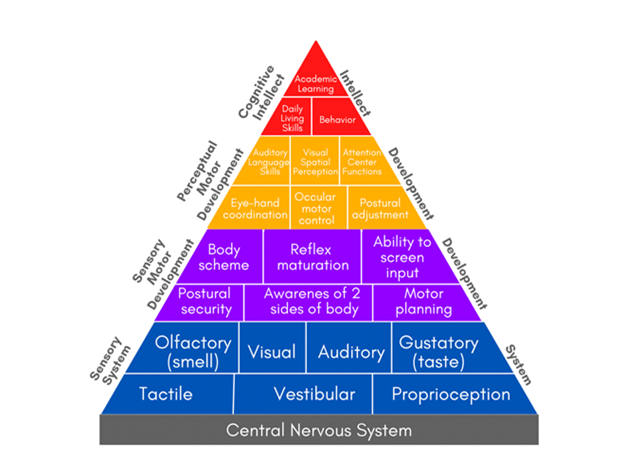
The vestibular system includes parts of the inner ear and brain. Movement affects these areas. It is a critical system because it affects development in other areas. But what is vestibular input? In its simplest form, vestibular input is the sensation of any change in position, direction, or movement of the head.

The receptors are located in the inner ear and are activated by the fluid in the ear canals moving as you move. When you go upside down, for example, the fluid in the ear canals gives information to the central nervous system about your body’s position in space. Vestibular input gives our bodies information about whether we are moving with or against gravity, fast or slow, moving or still, and what direction we are headed. From infancy through adulthood, vestibular information contributes to the development of:

  • Muscle tone
  • Righting reactions
  • Balance
  • Postural security
  • Eye movements
  • Overall alertness

What Does it Look Like?

If a child is processing vestibular information appropriately, then movement comes with control, balance, and safety. The child feels comfortable jumping, climbing, swinging, and taking calculated risks in play because the vestibular sense is providing accurate information about where the body is at in space. If a child is demonstrating difficulty with processing vestibular information, then they may be under- or over-responsive to movement, which will impact overall activity. If the child is under-responsive to vestibular input, then they may be able to tolerate a lot of movement before it registers, therefore the body may be in constant motion. When a child is over-responsive, or hypersensitive, to vestibular input then they may not be able to handle movement at all, resulting in avoiding activities that challenge balance and coordination.

Both children can present as uncoordinated and likely demonstrate ocular motor difficulties as well. The vestibular and visual systems work together when our central nervous systems are in harmony. Vestibular dysfunction can present with difficulties tracking, focusing, and smoothly looking between two objects (saccades).

Support Vestibular Development

Supporting your child’s vestibular development can make a big difference in their balance, coordination, and sensory development. Here is a list of vestibular activities that are simple, fun, and engaging that are easy to set up quickly and required with minimal equipment:

  • Swinging – playground swing or therapy swing in different directions and speeds
  • Spinning and Twirling – spinning in swivel chair or twirling in open space that is safe to avoid falls
  • Rolling and Tumbling – rolling on therapy ball forwards, backwards, or sideways
  • Obstacle Courses – activities with various textures and elevations (crawling through tunnels, climbing over cushions, walking on balance beams)
  • Jumping and Hopping – jumping on a trampoline or hopping on obstacles

For more information regarding vestibular activities check out Your Kids Table for some essential vestibular ideas.

Precautions for Vestibular Input

Always supervise the child closely during vestibular activities to prevent accidents or injuries. Make sure the environment is safe and free from hazards. Introduce new vestibular movements gradually to avoid overwhelming the child and progress the intensity as the child becomes more comfortable. Be aware of specific sensory sensitivities the child may have (spinning or rocking movements).

If you have any questions or concerns about your child’s vestibular or other sensory processing challenges, an occupational therapist can help create individualized interventions to meet your child’s specific needs and abilities.

Healthy Holidays

The holiday season is a busy and exciting time of year, but it can also be quite stressful. Between shopping, parties, traveling, and visiting family, it’s easy for your regular exercise routine to fall by the wayside. Research has shown that physical activity levels tend to decrease the most after holidays. But, you can have healthy holidays by following a few simple steps.

That’s why it’s so important to make your health a priority this time of year. Regular exercise can actually help reduce holiday stress and keep you feeling your best. It is important to stick to your exercise routine and reduce stress. Here are some of the key benefits of maintaining your fitness routine:

Stress Management for Healthy Holidays

The holidays bring a lot of added demands on your time and energy. Exercise is a proven way to manage stress and improve your mood. When you work out, your body releases endorphins that can lift your spirits and help you better cope with the pressures of the season. Making time to be active, even just a little big each day, can go a long way in keeping you calm and centered. Use additional stress management techniques to boost the impact of exercise.

Immune System Support

Cold and flu season tends to ramp up during the winter months. Staying active can help support your immune system and reduce your risk of getting sick. Keeping up with your workouts makes you less susceptible to holiday illnesses that could derail your plans.

Weight Management for healthy holidays

The holidays are full of rich, indulgent foods that can pack on extra pounds if you’re not careful. Regular physical activity helps you maintain a healthy weight by burning calories and boosting your metabolism. It also gives you an outlet for all the extra energy you may have from eating richer foods.

If you’re having trouble sticking to your exercise routine, consider talking to your physical therapist. They can create a customized fitness plan to help you stay on track, even with a busy holiday schedule. Physical therapists can teach you exercises you can do at home and provide tips for fitting activity into your day.

Here are a few quick tips to help you stay active this holiday season:

  • Schedule your workouts like any other important appointment and don’t cancel them.
  • Find ways to be active with friends and family, like going for a walk after a meal.
  • Keep home exercise equipment (like weights or a yoga mat) accessible and ready to use.
  • Park further away from stores and buildings to get in extra steps.

So, don’t let the hustle and bustle of the holidays derail your health and fitness goals. With a little planning and creativity, you can maintain your exercise routine and enjoy a happier, healthier holiday season.


Gestalt Language Processing: How Does it Work?

Navigating the complexities of language development in your child can be both rewarding and challenging. There are two ways in which children develop language, not just the familiar milestone charts seen online or at well child visits. When charts describe language acquisition and processing as a progression from cooing to babbling to first words building to sentences, this describes Analytic Language Processing (ALP). ALPs are often thought of as, “word babies”. Gestalt Language Processing (GLP) is another approach to language acquisition where children learn language in chunks or “gestalts.”

Rather than breaking down language into individual words and constructing sentences from scratch (as in ALP), gestalt processors typically learn phrases or sentences as whole units. These can be scripts or memorized phrases from movies, songs, or conversations, which they use in appropriate contexts.  The intonation or inflection of the script is copied by the child, even when the script is long and they do not pronounce all the words. Therefore, parents and caregivers will often know the script by the sound, dubbing GLPs as, “intonation babies”. GLP is less discussed or known about, despite being just as natural and typical as ALP.  Processing language as a GLP is not a disorder nor does it mean a child is autistic. However, however many people with autism are GLPs.

Supporting Communication Skills

Understanding GLP can be crucial for effectively supporting your child’s communication skills. Developing language as a GLP has distinct milestones through a process known as Natural Language Acquisition (NLA). Many children will go undetected as GLPs as they move through these distinct stages of NLA. Others will require speech therapy. Identifying the characteristics of gestalt language processing can help you determine whether your child may process language this way.

Characteristics of Gestalt Language Processing

  • Echolalia: This is the repetition of phrases or scripts from others, often verbatim. Children may repeat lines from a favorite movie or recite phrases they’ve heard without immediate modification.
  • Delayed Echolalia: In some cases, children may use previously heard phrases in future conversations, applying them contextually.
  • Chunked Speech: Instead of constructing original sentences, a gestalt processor may use learned phrases that are contextually relevant.
  • Difficulty with novel sentences: These children might struggle to create new sentences or phrases on their own but can communicate effectively using learned chunks.

Recognizing whether your child is a gestalt language processor can significantly influence how you approach their language development. While children who are analytic processors may learn language in a more conventional manner, gestalt processors often display different strengths and challenges. Understanding this distinction can help parents tailor their support, ensuring that their child’s communication needs are met effectively.  Remember, every child’s language development is different. Seeking guidance from speech-language pathologists can provide additional support tailored to your child’s needs. Together, we can foster an environment where our children thrive in their communication skills.