
Exploring the World Through Sensory Play

From infancy through childhood, children learn about their world using their senses or sensory play. They do this by touching, tasting, smelling, seeing, moving, and hearing. Even as adults we tend to learn best and retain information when we engage our senses. How many of us have walked into a room to be filled with memory only because of the smell? Or how a song can send a flood of memories of good times with friends. It is the sensory experience that has helped keep those memories as if they happened yesterday.

Providing sensory play activities for your children is one of the simplest, and most fun, way to explore and learn about the world! There are many different types of sensory play activities, including those that use the sense of smell, hearing, sight, and movement. The sense of touch is another way children gain information and develop an understanding of the big world that awaits! These experiences play an important role in development.

So, exactly what is, and how do you provide sensory play activities for your child? Simply put, sensory play is any type of play that activates and stimulates a child’s senses. Sensory play is tons of fun and simple to set up, but it can be difficult for parents to think of ideas to help their child engage in sensory activities. Here is some advice…keep it simple! Hopefully, the following ideas will get you, and your child, onto fun ways to explore and learn together.

Create Sensory Play Bins

It is simple for children to enjoy sensory play when you create a sensory bin for them to explore. These are easy to make by filling bins with various items. There are endless things to use. Rocks, sand, leaves, cotton balls, beans, rice, and pasta are a few that are easily found around your home. Hide small toys/objects to find or use scoops and spoons to fill containers.

Sensory Play With Food

Your first response is probably, “You are crazy!” Yes, it gets messy, but allowing your little one to play with food — squishing, smearing, and tasting as they go — gives them a sensory experience that helps them learn. It may increase your child’s interest in trying new foods, especially fruits and vegetables. Use pudding, whipping cream, or yogurt to make roads for cars or to imitate lines and circles.

Play Dough

Play dough recipes are so easy to find and can be made from items commonly found in your home. Or purchase Play-Doh on a quick trip to your local Target or Walmart! Many of the play dough recipes are edible which is a bonus when using with young children that like to put things in their mouths! Adding simple tools such as cookie cutters, rolling pins, and for preschool aged children, plastic knifes and scissors provide more learning experiences.

Sound Tubes

Start saving those paper towel and toilet paper rolls! Next collect a variety of different things to put inside, such as beads, rice, or beans. Fill the tubes and safely seal them, duct tape works great. And as easy as that you have created a sound tube for your little one that helps them connect with the auditory world around them as they enjoy the different sounds each one makes.

Swinging, Spinning, and Rolling

Swings are often a favorite activity for children. Challenge them by having the swing on their bellies to fly like “Superman”. Instead of pushing them from behind give pushes through the bottoms of the feet, or pull their feet then gently release. A totally different sensation can be given by gently twisting the swing. Spinning in circles, rolling down a hill, or rolling across the floor are other simple ways that a child can experience movement in natural and playful ways.

Pillow Crash

What home does not have pillows! Pull cushions off the couch or grab the bed pillows and let the fun begin. Jumping into pillows, rolling across pillows, or hiding under them while others give gentle pushes is a great way to provide deep pressure or proprioceptive input. This type of sensory play helps your child understand where their bodies are in space and helps in developing body awareness.
Water Sensory Play

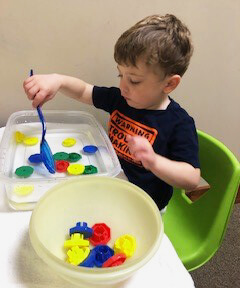
Water play may be the simplest way to give your child sensory play experiences. Whether it is in the bath tub, the kitchen sink, the outdoor pool, at the lake or nearby stream water provides endless fun for all ages. Adding simple common items such as cups, balls, sponges, squirt guns only add to the fun. Water play can be as simple as putting fingertips in, or jumping with both feet, or totally immersing themselves – each one giving a unique sensory experience.

These are only a few ways to provide your child with sensory play activities. They do not need to be complicated to be fun and most items can be found in your home. While it can get messy from time to time, helping your child engage with their senses will give them the chance to learn and grow as they interact with the world around them!

For more ideas, check out Little Bins for Little Hands to get over 50 sensory play activities. If you have concerns that your child doesn’t want to engage in sensory play, check out this blog on Sensory Processing Disorder to learn more and to learn how occupational therapy can help.

Is My Child Ready to Start Talking: Importance of Prelinguistic Language

Did you know, as soon as babies are born, they start to develop communication skills? Before toddlers start talking, babies learn prelinguistic (before language) skills. These skills will help to support language learning later in life. Prelinguistic communication is the way babies communicate without using words. Even as adults, we continue to use prelinguistic skills to communicate. Prelinguistic communication includes: gestures, eye contact, facial expressions, non-word vocalizations, imitation, and joint attention. Development of these skills set children up to be successful verbal communicators.

Why is Prelinguistic Language Important?

Prelinguistic skills form the foundation for which talking and understanding language is developed. A baby who has difficulty looking at their mother and attending to her while she is talking has fewer opportunities to see how words and sounds are made. They also have fewer opportunities to attach meaning to those words. Compare this to a child who enjoys watching their mother’s face. The child who is watching and attending is learning how the mouth moves to make sounds and words. This child is better able to attach meaning to what they are hearing and seeing.

In addition, infants and toddlers with joint attention difficulties (when you and your child are looking at or attending to the same thing at the same time) will have less opportunities to learn about things in their environment. When a child looks at something with an adult, and the adult comments on that thing, it provides a chance for the child to attach meaning to a word and learn more about the world. If the child cannot attend to things with adults, they lose out on these learning opportunities.

One common example would be if you are outside and hear an airplane. You and your child look up to the sky at the airplane, and you point and say, “airplane.” If your child has joint attention difficulties, they may not be able to follow your gaze or point up to the sky. So, when you say, “airplane,” they are looking at something different and are unable to attach meaning to that word.

Infants who have difficulty developing prelinguistic skills will likely face challenges developing verbal language skills and may also have difficulty interacting with others. Working on developing prelinguistic skills early on may lead to less difficulties communicating as your child moves from infancy to toddlerhood and beyond.

Skills Necessary to Develop Prelinguistic Communication

Looking and Listening

Babies look to their mother’s face as soon as they are born. They learn to discriminate human faces and recognize which faces are important. The ability to attend visually will allow babies to gain information about language by watching faces and mouths. Similar things occur with listening. Babies start to recognize human voices and learn which ones are important.

Turn Taking

Turn taking begins to develop within the first weeks after your baby is born. Parents begin responding to their baby’s smiles, vocalizations, and movements by adding sounds, actions, and words. Eventually, parents begin to leave gaps in their responses to allow their baby to respond. This develops into a back-and-forth interaction. You make a funny noise, your baby smiles, you make the noise again, your baby laughs and vocalizes.

Smiling

Babies begin smiling around six weeks of age. When babies smile, it fosters increased interactions between babies and their caregivers. Adults are more likely to continue interacting with babies when they are rewarded with a response like a smile. When babies are responsive to adult interactions, adults initiate communication more often.

Anticipation and Prelinguistic Language

By three months of age, babies should start to show excitement when they hear sounds associated with familiar situations. For example, your baby becomes excited when she hears the bathwater running because she knows it is almost bath time. During this time, awareness of gestures and facial expressions also expands. Babies show increased understanding that facial expressions and gestures carry meaning, and babies begin anticipating what will happen next based on a specific gesture or facial expression.

Copying

Imitating others fosters social interactions. By the time babies are nine months old, they should be able to copy simple gestures (hand clapping) and playful mouth movements (blowing raspberries, smacking lips, etc.). Children are more likely to be successful imitating words and phrases, if they are able to copy movements and gestures as an infant.

Joint Attention

Joint attention is when your baby is able to follow your focus of attention so you are both attending to the same thing at the same time. Babies should attend jointly to things with their parents and other adults. Joint attention also includes a baby’s ability to direct someone else’s attention to what they are interested in. By 12 months of age, toddlers should be able to point to what they are interested in. This encourages adults to engage even more, by naming the objects the toddler is pointing to. Non verbal communication skills continue to develop even as children begin to develop verbal language skills. Non verbal language remains strongly linked to verbal communication throughout language development.

Prelinguistic Language and Understanding

In a child’s first 12 months of life, understanding is based on non-language cues they pick up in the environment. This includes pointing, gestures, direction of eye gaze, and facial expressions. By 12 months of age, children should develop understanding of words such as “no” and “bye.” Many children have difficulty understanding because adults speak too quickly. This makes it difficult for children to pick out the important words in time. As children get older, this becomes easier.

Expression

Infants and toddlers need to be able to effectively communicate before they are able to start using first words. This occurs through nonverbal communication and includes use of gestures, facial expressions, vocalizations, and body language. First words appear between 10 to 15 months of age.

prelinguistic language

Is Your Child Having Difficulty with Prelinguistic Skills?

If your child is having difficulty developing prelinguistic skills you may notice these things:

  • Your child does not make eye contact or eye contact is limited
  • Does not use different sounds and vocalizations to indicate feelings (happy, sad, tired, etc.)
  • Child does not respond with a social smile
  • Not producing playful vocalizations or babbling as a baby
  • Limited or no use of gestures or voice to gain attention from others
  • Difficulty or not attempting to copy facial expressions or gestures
  • Child does not enjoy others playing with them or alongside them
  • Does not attempt to show you things or draw your attention to things they find interesting
  • Your child does not respond to different gestures or tones of voice (happy face/voice versus angry face/voice)

How to Improve Prelinguistic Language

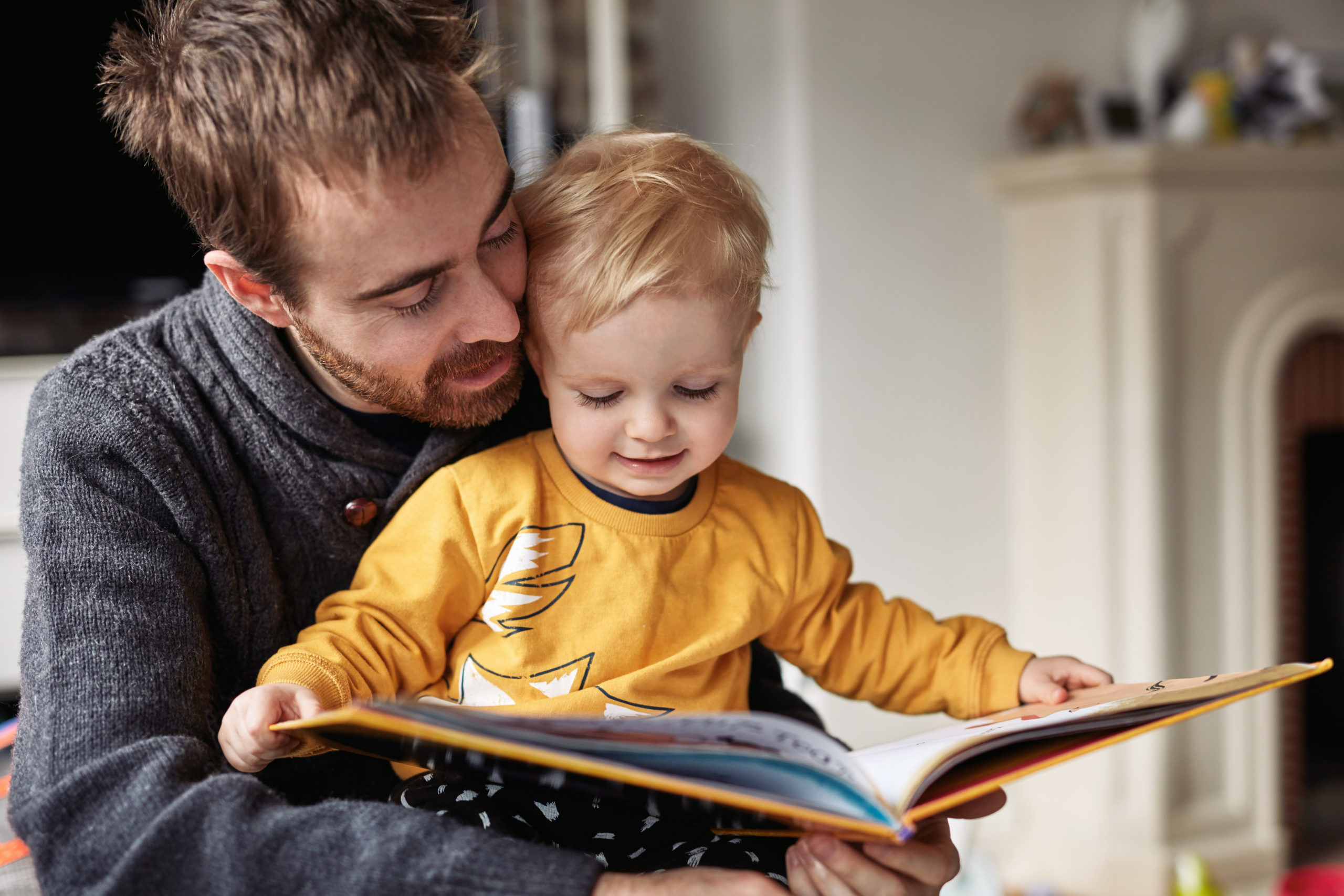
  • Take some time each day to play with your baby or child. This could include peek-a-boo or songs and finger plays for babies and dress up and hide and seek for toddlers and children. Reading books together is also great at any age.
  • Participate in joint attention. Follow your child’s gaze and talk about what they are looking at or interested in using simple language.
  • Talk to your baby or child throughout the day. Explain what you are doing so your child begins to link words with actions.
  • Simplify your language. Use shorter sentences and age-appropriate vocabulary. Also, slow down when you are talking to give your child more time to comprehend what you are saying.
  • Get on your child’s level. When you are face to face with your child when speaking, they can watch how your mouth moves and learn how to form sounds. They will also learn more about facial expressions.
  • Eliminate background noise. Turn off the TV or radio, so your baby or child can start to distinguish voices better.
  • Vary your intonation and voice. Changing your intonation will help to gain your child’s attention.

For more ideas on activities to do with your toddler to encourage both prelinguistic and verbal language, you can check out another one of MOSAIC’s blogs Birth to Five Language for Real Life. Parents Magazine also has some great activities you can easily do at home with your infant. If you have any questions regarding your infant or toddler’s language development reach out to one our skilled speech therapists at Mosaic Health & Rehab (406) 388-4988.

Hiking With Kids

As winter turns to spring, we all start itching to get outside as much as possible. Even if you love winter, it’s nice to find a kid friendly, and snow free spot to enjoy some time outdoors. This is especially important living in Montana since the spring and summer seasons are so short. Hiking with your kids is a great way to take advantage of this time of the year.

Best Trails to hike with Kids Requiring a Short Drive

Going for a hike is a great way to escape and relieve some stress. It gives you time to breathe fresh air, and enjoy nature, even if you can only make it a short distance. One of the best things about living in the Gallatin Valley is how many fun and kid friendly trails there are nearby to enjoy.

Missouri Headwaters State Park

If you haven’t been to Missouri Headwaters State Park yet, you need to add it to your list of places to visit. This is one of my favorite areas. The park is located near Three Forks, Montana. It’s really easy to get to by car from Bozeman and Belgrade.

One of my favorite things about this park is, it’s never crowded. You can find trails on both sides of the road. There are several parking areas, depending on where you want to start your adventure. The park has 5 miles of trails (spanning across over 500 acres). You can enjoy a short walk, or a longer hike depending on how you feel. This park also has a great picnic area and the cleanest pit toilets around!

Park entry is free for Montana residents. If you are not a Montana resident, the fee is $8 if you are driving a car or $4 if you are walking in or biking.

Hyalite Canyon Recreation Area

If you are from the Gallatin Valley, you’re probably familiar with Hyalite Canyon Recreation Area. Hyalite contains numerous trails to explore. There is also a reservoir which is great for paddle boarding, canoeing, fishing, or just splashing around near the shore. This place isn’t a secret though, and it’s well loved, so if you are visiting on a weekend be prepared for crowds.

The two most kid friendly trails in Hyalite are probably Grotto Falls and Palisade Falls. Both are well marked out and back trails. Palisade Falls is 1.1 miles total and has an elevation gain of 239 feet. Grotto Falls is slightly longer at 2.4 miles total and has an elevation gain of 278 feet. Both trails finish at pretty waterfalls. You’ll likely find children and dogs splashing around in the water at the base of the falls when you reach your destination.

Best Trails in Town (Bozeman)

If you are looking for a quick and easy trail to go hiking with your kids after school or work, Bozeman has lots of parks and a great trail system. Several trails are easily accessible from neighborhoods around town and don’t even require driving. The most popular trails around town still have parking areas though, if you aren’t close enough to walk.

Bozeman (Sourdough) Creek Trail is an easy trail for a leisurely walk. You should be able to push a stroller along it without difficulty. The trail is flat and approximately 2 miles in length (out and back), and it follows alongside Bozeman Creek.

The Gallagator Trail is another in-town favorite of mine. This is a short and flat trail great for kids and families pushing strollers. It’s approximately 1.5 miles out and back, but if you want to go for a longer walk, it connects to other trails. Langhor Park is located along this trail. It has beautiful community garden plots, a butterfly garden, and a fun boulder for climbing.

Essentials for Hiking with Kids

If you are planning on getting out and exploring some of the great trails in the area with your kids make sure you are prepared. Most trails are busy enough or in areas where you shouldn’t need bear spray, but I take it whenever I go into Hyalite Canyon just to be safe. You will also want to make sure you have good walking shoes, sunscreen, hats, and sunglasses on hand. The sun can be brutal, even on short hikes. Lastly, make sure you have some water to drink and plenty of snacks! Most of these trails have picnic areas or picnic tables if you want to spend more time and have lunch while you’re out.

hiking with kids

Other Resources for Hiking with Kids

I love exploring new trails whenever I get a chance. One of the most helpful websites/apps I have found is AllTrails. If you download the app or got to the website, you can put in your city, or the name of a trail or park you are interested in, and it provides you with maps, trail length, elevation, and a wealth of other information. The Gallatin Valley Land Trust also has a lot of helpful information about nearby trails. They even host guided walks during the months of May and June.

So, get out there, unplug, and enjoy the warmer weather that’s headed our way! You can also check out our Summer Scavenger Hunts article if you are looking for something fun to do while you are out on the trail hiking with your kids.

Headaches and Physical Therapy

Headaches can be a major cause of disruption to our daily routines whether that be at home, at work, or in a social environment. Headaches can come on without warning and last from minutes to days. There are a variety of different triggers that cause headaches, not to mention an assortment of different types of headaches. Getting more sleep, drinking water, taking medications, and even just laying down in a dark room could certainly be a great treatment. Perhaps you are trying these and they work. Maybe you only receive temporary relief or perhaps you haven’t found any relief at all. This is where physical therapy for headaches can help bridge the gap to get you functioning without limitation!

Types of Headaches

Firstly, let’s discuss the main types of headaches individuals suffer from. Although there are many varieties of headaches, we will discuss 4 main categories. They are cervicogenic, tension, migraine, and cluster headaches.

  • Cervicogenic headaches will typically occur in the back of your head or neck and radiate to the top of your head. It can affect one or both sides of your head or neck. Rarely do they cause nausea, dizziness, or visual changes.
  • Tension headaches will normally affect the forehead/temple region of your head. It often feels like a dull pressure or rigid band around your forehead. These can last from minutes to days.
  • In migraines, people often report moderate to severe throbbing pain that can occur on one or both sides of the head. Migraines can last anywhere from 4-72 hours and have a variable frequency. Oftentimes people will also report nausea, vomiting, and sensitivity to light, sound, or smells.
  • Lastly, we have cluster headaches. These come on rapidly while feeling especially sharp and occur behind or around the eye. Clusters typically last 15 minutes to 3 hours. Individuals may get more than 1 headache a day during a cluster period but will have a long period of remission before another onset.

Common Causes

Now that we have identified the main types of headaches, we need to address the multitude of issues that can cause these headaches or similar symptoms. This is not an all-inclusive list, but these are common reasons why individuals might be suffering from reoccurring headaches. They include:

  • Concussions
  • Brain Injuries
  • Whiplash
  • Poor Posture
  • Muscle Tightness/Joint Stiffness
  • Muscle Weakness
  • Sensory Processing Issues
  • Sinus Pressure
  • Clenched Jaw
  • Nutrition Deficiencies
  • Medication Side Effects
  • Lack of Sleep
  • Dehydration
  • Stress

How Physical Therapy for Headaches can Help

So, how can physical therapy help? Our physical therapists will conduct an evaluation where we will perform a detailed evaluation, including a history, to identify possible triggers such as hydration status or medications. We will also perform a global systems review of your body. From there we will conduct a focused physical evaluation, making certain to screen for red flags while also checking your range of motion, muscle strength, muscle endurance, and sensory systems. This will help to determine if there are any underlying factors that may be causing your headaches. Most importantly, our physical therapist will help determine the best course of action based upon your individual findings.

What are red flags? These are symptoms that we look for that may be uncharacteristic of headaches and indicate a different pathology. These include, but are not limited to, abnormal nervous system findings, sudden severe headache with increasing intensity, numbness or tingling, weight loss, fever, malaise, or night pain.

To find out if physical therapy is right for you, call and talk to one of our therapists! And, for additional information on headaches, Mayo Clinic and Stanford Health, are great resources to check out.

References
  1. May A. (2018). Hints on Diagnosing and Treating Headache. Deutsches Arzteblatt International115(17), 299–308. https://doi.org/10.3238/arztebl.2018.0299
  2. Steiner, T. J., & Fontebasso, M. (2002). Headache. BMJ (Clinical Research Ed.)325(7369), 881–886.

Back Pain – Finally Some Good News

Back pain is a huge problem in developed nations worldwide. It has or will affect most of us. But the good news about back pain is that PT can help. The current estimate is that 80% of people will experience back pain at least once. It is the single biggest cause for disability, the third most common reason for doctor visits, and one of the most common reasons for missing work. It’s also expensive. Back and neck pain make up the biggest healthcare expense in the US, totaling $134 billion spent in 2016. The next two most expensive conditions were diabetes — $111 billion in spending — and ischemic heart disease at $89 billion.

Diabetes and heart disease being so expensive to treat doesn’t surprise most people. They can both lead to other major problems, require long term medication, could require surgery, and both can be fatal. Back pain won’t kill you, usually doesn’t require long term medication, and usually doesn’t require surgery.

So, why is back pain so expensive?

Firstly, it’s common. Secondly, our system isn’t very good at treating it. Current recommendations include starting with activity modification and active treatments like physical therapy. Research backs this up, showing better outcomes and lower costs with early PT. Unfortunately, only 2% of people with back pain start with PT, and only 7% get to PT within 90 days. At the same time, a study looking at about 2.5 million people with back pain showed that 32.3% of these patients received imaging within 30 days of diagnosis and 35.3% received imaging without a trial of physical therapy. Both of these things go against current practice guidelines for treatment of back pain.

What is TRICARE doing?

A new pilot program is being rolled out by TRICARE, the insurance system used throughout the US military. TRICARE is waiving the payment owed by the patient for up to three PT sessions in an attempt to improve the use of what the Defense Health Agency calls “high value” treatment for low back pain. The theory is that once a person sees some benefit from PT treatment, they’re likely to go back for more. This is the “try it before you buy it” approach. Think of the 7-day free trial Netflix offers, free samples poured in wineries and craft breweries, or the people you see standing around in supermarkets with food on toothpicks.

TRICARE’s data seems to indicate that it works just as well for healthcare as it does for other businesses. In a press release they state that once people attend one session of physical therapy, they’re likely to go back for more, no matter what their co-pay is. But TRICARE found that higher co-pays could be a barrier to people trying that first visit. For the group of patients with the highest co-pays in the system, only 38% of the people prescribed PT attended the first visit. That’s about half the rate of attendance found in the lowest co-pay group.

This is Great News for People with Back Pain

The fact that such a major insurer is looking into the value of PT is great news for everyone. If TRICARE can show that lowering the cost of PT for patients can improve outcomes and save insurance companies money, other major insurers will likely follow. This could improve the lives of millions of people every year while reducing the huge cost of treating low back pain for the country. That seems like a win for everyone involved. Hopefully TRICARE will be bringing this program to Montana in the near future.

In the meantime, if you are suffering from back pain, physical therapy at MOSAIC can still help! Call today to schedule your evaluation.

Toys for Pencil Grasp and Writing – MOSAIC Gift Guide Part II

MOSAIC’s toys for developing pencil grasp and writing are here with the Christmas holiday just around the corner! Along with the excitement of the season also comes the stress of finding that “perfect toy” for that special child. Toys are a BIG thing for occupational therapists. Therefore, we use toys to help guide a child’s development. We look for toys that help develop curiosity, problem solving, creativity, cause and affect, and/or motor skills, both gross and fine motor. Fine motor skills are important as they are the foundation to do everyday tasks such as buttoning, snapping, tying, grasping a pencil, and the list goes on!  A child’s ability to hold and use the pencil fluently and effectively requires a number of skills. These skills include bilateral skills, using both sides of the body in a coordinated manner, and stabilization for posture.

What Fine Motor Skills are Important?

  • Pincer grasp – This is the neat “pinch” achieved between the thumb and index finger.
  • Thumb opposition – The thumb rotates and reaches to touch all other fingertips of the same hand.
  • Palmar arches – Picture making a circle by touching thumbs to finger tips or making “binoculars” with your hands. This refers to the arch formed when we “cup” our hands.
  • Separation of the two sides of the hand – This is the use of the thumb, index, and third fingers of the hand while maintaining stability in the fourth and fifth fingers of the hand.
  • Wrist stability and extension – This is the position of the wrist so that it is resting on the table and slightly extended so that the fingers can be used to control the pencil.
  • Hand strength – This refers to the contraction of the hand muscles to grasp a pencil to control it without fatigue or pain.
  • In-hand manipulation – This relates to the ability to move items around in the hand using precise finger movements and includes translation, rotation, and shift.

Finding toys that will help with developing pencil grasp does not need to be a daunting job because there are many simple and inexpensive options that kids will love!

Toys for Pencil Grasp and Writing

  • Wind up toys
  • Wikki Stix – use these waxed pieces to make shapes/letters/be creative
  • Beads and lacing toys
  • Tweezers, clothes pins, or chop sticks – use to pick up and sort items like beads/cereal/pompoms
  • Play dough – roll, squeeze, stretch, or use tools such as plastic knifes/scissors/rolling pins
  • Magnetic toys – magnetic tiles or blocks
  • Tools sets – screw drivers, nuts, and bolts
  • Marble games – marble mazes, marble runs
  • Trigger toys – nerf gun, water pistols, Hungry Hippos
  • Peg boards – Lite Brite, pegged puzzles
  • Constructive toys – LEGO, Tinker Toys, K’nex
  • Stickers and sticker books
  • Dice games – Tenzi, Yahtzee, Farkle
  • Stick toys – Kerplunk, Melissa & Doug Suspend, pick up sticks
  • LEGO

In addition, there are a multitude of common items around your home that can be turned into great fine motor development activities. Look for buttons, paper clips, elastic bands, coins, toothpicks, plastic containers, and storage bags (open/close to get snacks or small toys), noodles (for stringing or sorting), bubble wrap, sponges…

Above all, let the child inside you be creative and use a few quick resources to help inspire your creativity.