Flat Feet in Kids: When Should Parents Be Concerned?
If you’ve noticed that your child’s feet look flat when they stand or walk, you’re not alone. Flat feet are one of the most common reasons parents ask pediatricians and physical therapists about their child’s development. The good news is that most children with flat feet have completely normal foot development and will never experience pain or long-term problems.
Knowing the difference between normal development and a condition that deserves further evaluation can help parents make informed decisions and avoid unnecessary worry.
What are Flat Feet?
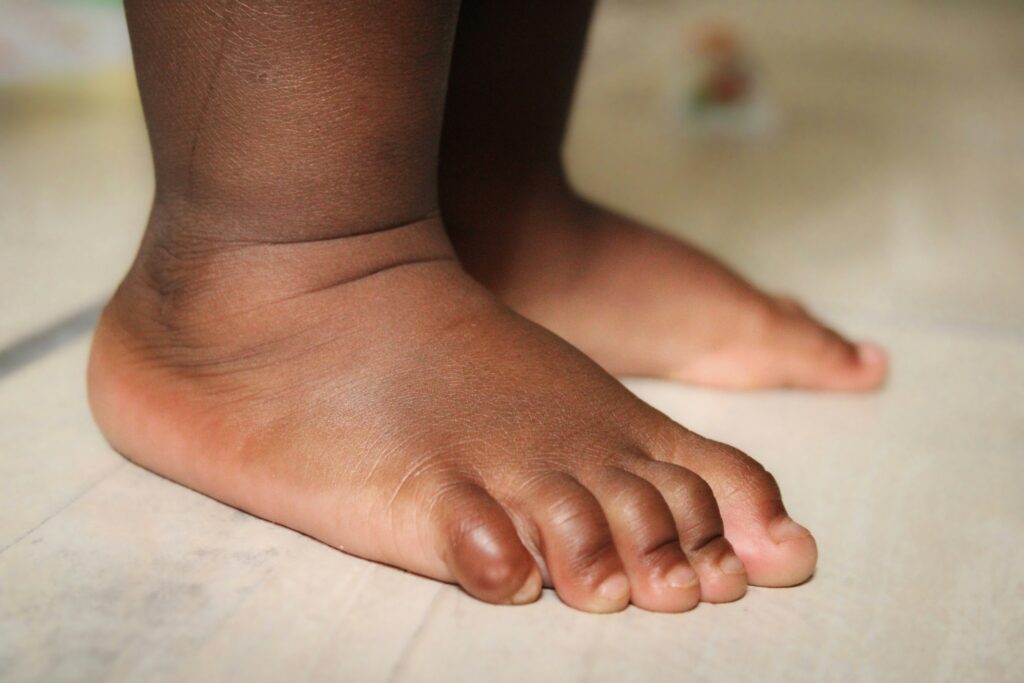
Flat feet, also called pes planus, occur when the arch on the inside of the foot appears lower than expected or disappears when a child is standing. In many young children, this is a normal part of development.
Babies and toddlers naturally have a layer of fatty tissue on the bottom of their feet that hides the arch. As children grow, their bones, muscles, ligaments, and tendons mature, allowing the arch to gradually develop. Research shows that the arch continues developing throughout childhood, with significant changes occurring during the first decade of life.
Most children are born with flexible flat feet, meaning an arch appears when they sit, stand on their toes, or when the foot is not bearing weight. Flexible flat feet are considered a normal variation of development in most children.
Why Do Some Children Have Flat Feet?
Several factors can contribute to flat feet in children. Normal growth and development are the most common reasons. Family history also plays an important role, as flat feet often run in families.
Some children naturally have looser joints and more flexible ligaments, allowing the arch to flatten more when standing. Tight calf muscles or Achilles tendons can also influence foot position and walking mechanics.
Less commonly, flat feet may be associated with neurological conditions, connective tissue disorders, or structural abnormalities that require medical evaluation.
When Are Flat Feet Normal?
For most young children, flat feet are simply part of growing up. If your child runs, jumps, climbs, and plays without pain, their flat feet are usually nothing to worry about. Many children develop stronger arches as they get older without any treatment.
Current research suggests that treating painless flexible flat feet solely to create an arch is generally unnecessary. Studies have consistently found that shoe inserts and corrective footwear do not permanently change the structure of a child’s foot as it develops. Instead, the arch typically matures naturally over time.
When Should Parents Be Concerned?
Although most cases are harmless, there are situations where an evaluation by a pediatric physical therapist or healthcare provider is recommended.
Signs that deserve attention include foot pain during activity or after walking, frequent complaints of tired feet or legs, difficulty keeping up with other children, frequent tripping or poor balance, one foot looking significantly different from the other, stiffness that prevents the arch from appearing when standing on tiptoes, or swelling and persistent limping.
Children who consistently avoid physical activity because of foot discomfort should also be evaluated. Pain is one of the most important signs that a child’s flat feet may need treatment.
How Can Physical Therapy Help?
Physical therapy focuses on improving how the foot functions rather than simply changing its appearance. A pediatric physical therapist evaluates the entire movement system, including foot posture, strength, balance, flexibility, walking pattern, coordination, and muscle control.
Treatment may include exercises that strengthen the muscles supporting the foot and ankle, balance activities that improve stability, stretching to address tight calf muscles, gait training to improve walking mechanics, and activities that develop overall lower body strength. Therapy also helps children improve confidence during sports, playground activities, and everyday movement.
Do Shoe Inserts or Orthotics Help?
Parents are often surprised to learn that orthotics are not recommended for every child with flat feet. Current evidence suggests that orthotics do not permanently create or restore the arch in children with flexible flat feet. However, they may be helpful for children who have pain, fatigue, or difficulty participating in daily activities.
When prescribed appropriately, orthotics can improve comfort, reduce stress on the feet, and allow children to stay active while other treatments such as strengthening and stretching address the underlying movement issues.
For children without symptoms, supportive shoes and normal physical activity are often all that is needed.
What About Posture?
Flat feet can sometimes contribute to changes higher up the body, including knee valgus, or “knock knees.” When the arch collapses excessively, the foot may roll inward, affecting the alignment of the lower leg and knee during movement. While not every child with flat feet develops these issues, orthotics can help improve foot alignment and reduce stress on the feet and knees in children who have pain or movement difficulties. Current research shows that orthotics improve comfort and movement mechanics but do not permanently correct knee valgus or overall posture. When needed, the best results are typically achieved by combining orthotics with strengthening and balance exercises.
How Parents Can Support Healthy Foot Development
Parents can encourage healthy foot development by allowing children plenty of opportunities for active play. Running, climbing, balancing, hopping, and playing outdoors all help strengthen the muscles that support the feet.
Choosing well-fitting athletic shoes that provide comfort and flexibility is generally more beneficial than purchasing expensive corrective footwear. If your child enjoys safe barefoot play on grass, sand, or other natural surfaces, this can also help strengthen the small muscles within the feet. Most importantly, pay attention to how your child feels rather than how their feet look. Pain, fatigue, or difficulty participating in activities are much more meaningful indicators than the appearance of the arch alone.
References
- Banwell HA, Paris ME, Mackintosh S, Williams CM. The typically developing paediatric foot: how flat should it be? Journal of Foot and Ankle Research. 2017.
- Choi JY, Hong WH, Suh JS, et al. The long-term structural effect of orthoses for pediatric flexible flat foot: A systematic review. Foot and Ankle Surgery. 2020.
- Treatment of Pediatric Flatfoot: A Systematic Review-Based Consensus and Guidelines. 2026 Clinical Practice Guideline.
- Liu Y, Zhang Y, Li Y, et al. The effects of foot orthoses on radiological parameters and pain in children with flexible flat feet: A systematic review and meta-analysis. Frontiers in Pediatrics. 2024.
- Zangi M, Taheri M, Ahmadi O, et al. Biomechanical effects of foot orthoses in children with flexible flat foot: A systematic review. Journal of Rehabilitation and Assistive Technologies Engineering. 2026.