Gross Motor Milestones: Stairs

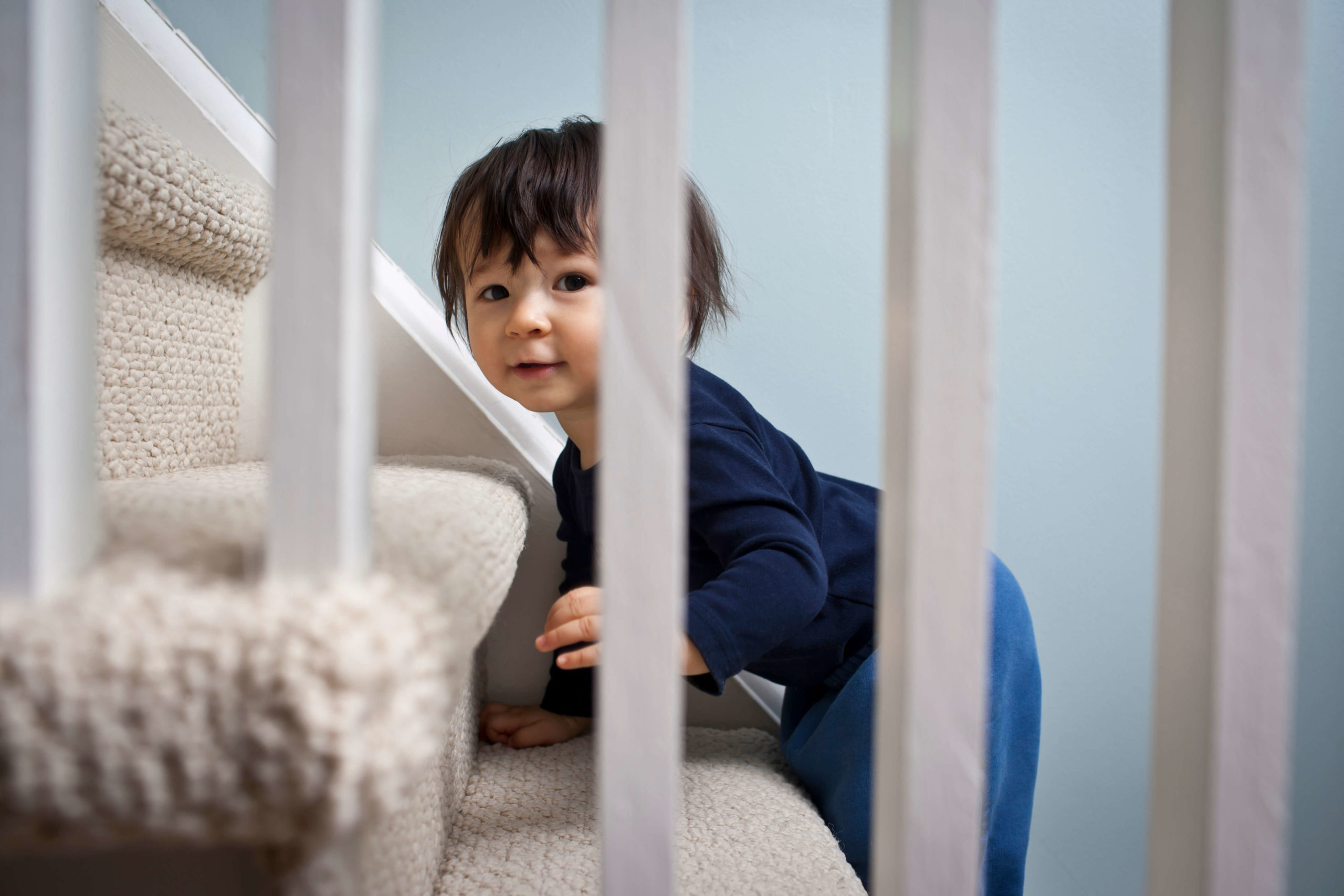
stairsThe most important thing when thinking about stairs is safety! Make sure you have stairs blocked off so kids can’t get to them when you aren’t watching. The next best thing is to make sure kids learn a safe and age appropriate way to go up and down stairs. Stair training starts with creeping and progresses to walking. Support and form change with increasing age, strength, and balance.

50% of Kids Demonstrate These Stair Milestones

  • Creeps up 2 steps on hands and knees by 14 months
  • Creeps backward down 3 steps without support by 16 months
  • Walks up 4 steps with support, placing 1 or both feet on each step by 16 months
  • Walks down 4 steps with support from only adult’s finger, placing 1 or both feet on each step by 18 months
  • By 24 months, walks up 4 steps without support, placing 1 or both feet on each step
  • Walks down 4 steps without support, placing 1 or both feet on each step by 25 months
  • Walks up 4 steps with support, placing 1 foot on each step by 28 months
  • By 36 months, walks up 4 steps without support, placing 1 foot on each step
  • Walks down 4 steps without support, placing 1 foot on each step by 44 months

 Ideas For Creeping Up and Down Stairs

  • Have your child practice crawling over your legs to get a toy while you sit on the floor.
  • Place a couch cushion on the floor and see if your child can crawl up on to it.
  • Place a toy on the 2nd or 3rd step and have your child kneel at the bottom stair. Stay behind your child to protect them from falling. Assist them as needed by bringing one knee up to the next step and giving them stability to push against.
  • To go down, turn your child so that his or her belly is against the stairs. Assist them coming down in this position by bringing one leg down to the lower step and then the other if they need additional help.
  • Practice climbing up onto the couch and then sliding off the couch with stomach against couch cushions.

Ideas For Walking Up and Down Stairs

  • Your child should be able to creep up and down stairs safely as well as walk independently.
  • Stay close to your child at all times to prevent falls. When working on stairs, you should always place yourself between your child and the bottom of the stairs.
  • Have your child practice walking over obstacles (such as a stick or jump rope) on the floor.
  • Practice stepping up onto and down off of a short stool, curb, or other low object. Start with holding both hands and progress to 1 hand held and then to no support as your child masters each level of decreasing support. Also, alternate which foot steps up and down first.
  • Place toys on the top or at the bottom of the stairs for motivation.
  • Start with 2-3 steps at a time and gradually increase the number of stairs as your child’s skill improves.
  • Practice carrying various items to improve balance while walking up and down stairs.
  • Rehearse climbing up and down off playground equipment.
  • Practice balancing on 1 leg to prepare your child for placing 1 foot on each step during stair climbing.
  • Place 1 colored foot print (or a bright piece of tape) on each step as a visual cue to practice using a reciprocal pattern.

Check out Gross Motor Milestones: Single Leg Balance to learn what your child should develop next. If you have concerns regarding your child’s gross motor skills, contact MOSAIC Health & Rehab for additional suggestions or for a free screen. To learn more, check out this great milestone moments list from the CDC.

Dry Needling At MOSAIC Health & Rehab

What is Dry Needling? Dry needling is a form of skilled instrument-assisted manual therapy. By inserting a thin filiform needle into a muscle, pain can be decreased. It can also reduce muscle tension, and improve joint mobility.  Dry needling helps “reset“ the muscle by stimulating the nervous system. It also improves blood flow, promotes relaxation, and decreases over activity of the muscle.

Dry needling is not a stand-alone intervention. Therefore, it is part of a broader approach of physical therapy using an individualized blend of exercise, stretching, and other appropriate interventions. It resets the muscle by eliciting a reflexive, local twitch response to help decrease spontaneous electrical activity, improve blood flow, decrease banding, and promote relaxation of the muscle.

When an injury occurs from repetitive use or an acute trauma, damaged tissues produce inflammation. These tissues may go into a protective tension state. This guards against further damage from the use of the injured muscle. This produces trigger points which are tender, taut bands of muscle that can produce either local or referred pain. These trigger points inhibit circulation which prevents oxygen-rich blood from reaching the tissue and waste products from leaving.

Other adverse changes that occur in these tissues include increased acidity, spontaneous electrical activity at the neuromuscular junction, and biochemical changes that can affect pain sensitivity. These changes stimulate the body to produce fibroblasts, a cell that produces fibrosis or scar tissue. Adhesions may build up around the muscles and tissues. This limits their ability to fully lengthen or shorten. It can also cause compression and irritation of nerves, such as with carpal tunnel syndrome. This typically leads to biomechanical disturbances in muscle activation patterns and daily function.

The Difference Between Dry Needling and Acupuncture

Dry needling is not acupuncture, and there are many key differences between the two. Dry needling is based on western neuroanatomy and the modern scientific study of the body. It treats specific musculoskeletal or neurological impairments and pain. Acupuncture is based on the ancient principles of traditional Chinese medicine and uses the “Chi,” or flow of energy, to treat systemic dysfunction such as allergies, digestive problems, poor eyesight, and the common cold, as well as musculoskeletal issues.  Aside from the theoretical basis, the technique, depth of needle insertion, intent, and duration of treatment also varies considerably. Dry needling is not appropriate for everyone and the treating physical therapist will help weigh the benefits and risks of treatment and ensure appropriate patient selection.

Sleep and Your Child

The trouble with a child who is missing sleep is that her behavior is confusing. It’s hard to believe that the real culprit behind her temper tantrum is lack of sleep when bedtime is one of your biggest battles, or she loses it simply because you dropped her water bottle. And when she can’t even dress herself, even though she did it yesterday, it feels more like a plot against you than an issue of fatigue. How can a child who is supposedly so tired somehow garner the energy to veer off her path just far enough to bop her brother in the head? Then, jump on her bed laughing hysterically when you try to get her down for the night?”

If your child is misbehaving, it’s very likely that he or she is crying for sleep. Sleep-deprived children can include babies who are sleeping less than 14 – 16 hours in a 24-hour period; toddlers sleeping less than 13 hours, preschoolers less than 12 hours, school-age children less than 10 hours, or adolescents sleeping less than 9.25 hours a night.

“And until your child gets more sleep, no punishment, no discipline strategy will stop the challenging behaviors. Sound sleep is a key to good behavior. The problem is that children rarely tell you that they are tired. Instead, they get wired, which escalates into a frenzy of energy. It’s as though their body is out of control — and it is.”

Signs of Sleep Deprivation

  • Loses it over little things
  • Easily frustrated or irritated
  • Upset by changes
  • Easily overwhelmed
  • Clumsy
  • Has to be woken in the morning
  • Frenzied, hitting and yelling
  • Can’t focus and pay attention, doesn’t listen
  • Impatient and bossy, less flexible

How to Tell if Your Child is Getting Enough Sleep

  • Wakes up on their own
  • Listens
  • Stays focused on tasks
  • Is able to wait their turn
  • Falls asleep easily at night
  • Can deal with changes in routine or surprises well

What You Can Do

  • Establish a regular wake time (within 30-60 minutes, 7 days a week)
  • Exposure to morning light (before exposure to screens)
  • Establish a regular breakfast time
  • Emphasize exercise
  • Protect nap times (for infants this can be within 45 minutes of waking up! For toddlers it can be 1.5 to 2 hours after waking and for preschoolers it is 5-6 hours after waking.)
  • Serve snacks and meals on a regular schedule with the same bedtime each night
  • Feed your child 6 times per day (about every 3 hours) providing a balance of protein and carbs with an emphasis on protein boost at bedtime

Recommended sleep for your child in a 24 hour period

Infants (0-11 months)                                                                                                             14-18 hours

Toddlers (1-2 years)                                                                                                                13-14 hours

Preschoolers (3-5 years)                                                                                                         11-13 hours

School Age (6-13 years)                                                                                                          10-11 hours

Teen (14-17 years)                                                                                                                    9.25-10 hours

Adult (26-64 years)                                                                                                                 8.25 hours

All information is provided courtesy of Mary Sheedy Kurcinka, a parenting educator located here in our valley and author of several books including Sleepless in America: Is Your Child Misbehaving…or Missing Sleep? Mary can be reached on Facebook at Mary Sheedy Kurcinka, and at [email protected]. She provides classes locally and is available for in-home consultations to help solve your sleeping difficulties. If you have more questions about sleep, reach out to one of our occupational therapists for help.

Mealtime Miseries

MOSAIC Rehabilitation is hosting a 2-day continuing education course on feeding, Mealtime Miseries:  Management of Complex Feeding Issues, through the Pediatric Feeding Institute.  The course will be held August 18th and 19th at the Holiday Inn Express & Suites in Belgrade, MT.
How does feeding, a process so integral to the child’s health and well-being, go awry? The focus of this 2 day course is on the Transdisciplinary Effective Assessment and Treatment (TR-eatTM) model integrating oral motor therapy techniques and behavioral management for the treatment of complex feeding problems. It will cover innovative strategies, using video case examples, to address oral aversion, food refusal, poor transition onto solid foods, texture grading, learning to chew, self feeding and feeding difficulties related to autism and picky eaters. It is relevant for infants and children through school age. This course is packed with practical solutions and hands on techniques that will empower you with new treatment ideas for your most complex patients. These interventions are systematic and evidence based with research supporting outcomes. This course is appropriate for the following clinicians working with children with feeding disorders:  OT, COTA, SLP, RD, RN, CSW, Psychologists. This course is appropriate for clinicians with all levels of experience.

For more information, please call Amy at (406) 388-4988 or email her at [email protected].  For course objectives and agenda or to download the registration form, click here.

Feet!

Children’s feet come in all shapes, sizes, and positions. It is difficult to know what is typical and what is not. Additionally it’s difficult to know when to refer to a physical therapist or when to get orthotics. Common physical therapy (PT) referrals include: “toeing in”, “over pronation” and “toe walking”. Interestingly, all of these issues can be normal depending on the age of the child and their bony structure.
Toeing-In/Out

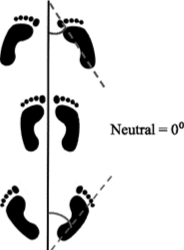
Known as the Foot Progression Angle (FPA) or “angle of gait” is between -3 and 20 degrees in most children and adults. Early walkers may show more toe-in (pigeon toed) initially. This resolves as their feet mature and become less like chubby baby feet and more defined like adult feet.
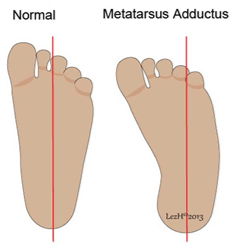
Toeing in is called metatarsus adductus. It can come from the forefoot curving in. Toeing in can come from torsion (twisting) of the long leg bones. This called “tibial torsion” or “femoral torsion”.  It can also come from the hip and how the long upper leg bone (femur) sits in the hip socket. These structural issues often resolve over time in a typically developing child. “W” sitting can cause toeing in and permanent knee and hip misalignment and should be avoided. If children have abnormal muscle tone (high or low), they should be referred to PT. A PT referral is indicated if a child is tripping and falling from toeing in. Toeing out (duck feet) is often related to tight hip musculature and should be assessed by a PT.

Pronation

Often called “over pronation” or “flat feet” is a combination of foot and ankle motion that occurs in a typical gait pattern during running or walking. Everyone pronates! Pronation is often confused with “fallen arches” or flat feet that are mostly soft tissue related not bony alignment issues. Pronation or flat feet become a problem when there are abnormalities in bony alignment and/or lower extremity pain or discomfort. “Flexible flat feet” are not usually treated unless symptomatic. Having a gait analysis with video that can be viewed frame by frame is important for determining the mechanics of a child’s gait pattern with walking and running. A physical therapist can analyze one’s gait at any age. They will also help determine the need for orthotics, PT treatment, or supportive shoes.

Toe Walking

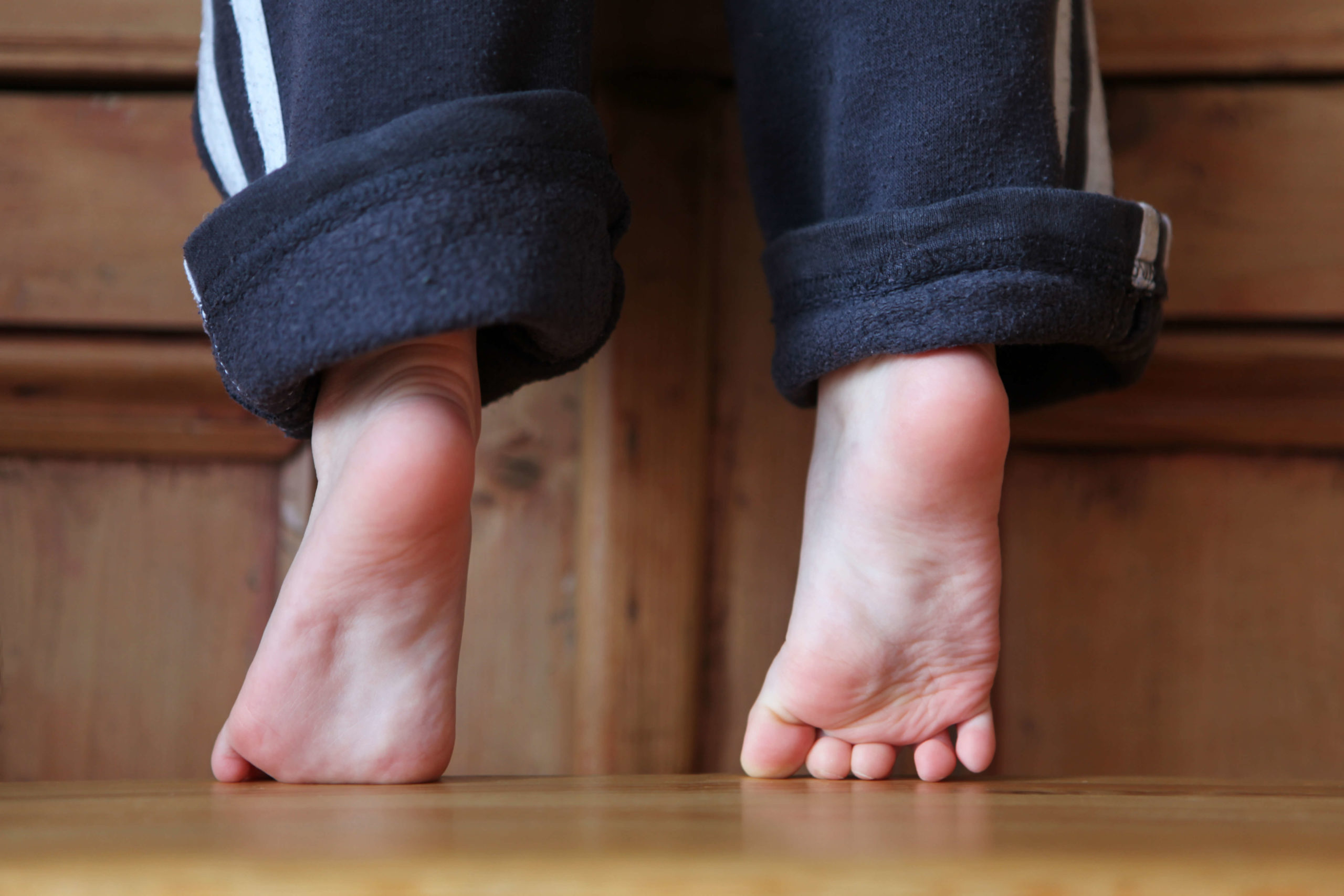
feetThis may occur when children start walking around 1 year of age. However, it should never continue past the first few weeks to months of walking. Toe walking may be due to high muscle tone in a child’s calves, sensory or vestibular issues, or from retention of primitive or infant reflexes. Physical therapy is indicated if your child continues to toe walk past the first few months of learning to walk. It rarely resolves on its own and is much easier to treat when the child is younger before habits are formed and calves/heel cords begin to tighten. Once a lack of range of motion occurs (inability to bend ankle bringing toes toward shins) there are now two issues to address: walking on toes and muscle tightness which could lead to contracture. Extreme cases will lead to bracing/ankle foot orthotics and eventually to surgery to release the Achilles tendon.

If you have concerns about your child’s feet, contact MOSAIC Health & Rehab to schedule a free screen or to set up an evaluation. If your child is walking on their toes, check out Is Toe Walking Really Idiopathic? for more information.

Speech and Language – What is the Difference?

We often hear the phrases, “Your child needs speech,” or “My child receives speech therapy,” but it’s not as common to hear, “Your child needs language therapy,” or “My child receives speech and language therapy.” This has led to a lot of confusion for individuals who are not speech-language pathologists. Did you know speech and language are actually two completely different things?

What is Speech and What is Language?

Speech includes: articulation (the formulation of sounds using the tongue, teeth and lips), voice, and fluency. When a child has trouble making his sounds correctly, such as saying “tat” for “cat” or has problems with his voice (hoarseness) or fluency (stuttering) he has a speech disorder. This is separate from a child’s ability to organize thoughts using the correct word or combination of words.

Language is the ability to understand others in order to share thoughts and ideas completely and clearly. It does not have to do with how sounds are made. We separate language into two parts: receptive language and expressive language.

Receptive Language

This is a child’s ability to understand language. It is known as input.  It includes both verbal (words and sentences) and nonverbal (gestures) language. Receptive language includes several things. For example, a child’s ability to understand a directive as a command. It also includes understanding that a question is a question and therefore, requires an answer. It also includes a child’s ability to understand concepts such as “in” or “big” as well as their ability to correctly interpret complex grammatical forms. For example, understanding that in the phrase, “The baby was kissed by the lady,” it was the lady who did the kissing, not the baby.  In typical development, children begin to develop some receptive understanding before they begin to express themselves.

Expressive Language

This is a child’s language output.  It includes a child’s ability to use words and grammar rules that dictate how words are combined to make phrases, sentences, and paragraphs. Expressive language includes a child’s use of signs, gestures, sentences, etc.

An easy way to remember the difference between receptive and expressive language is receptive language is how a child understands language and expressive language is how a child uses language. When a child has difficulty understanding others or sharing their thoughts clearly and completely, he has a language disorder.

Language disorders and speech disorders can occur together or by themselves; therefore, your child may only receive therapy to work on improving receptive and/or expressive language or they may receive therapy to work on improving articulation (speech). They may also receive therapy to work on improving expressive and/or receptive language AND articulation (speech).