Incorrect Tongue Resting Posture? It’s Not Just a Problem in Children

Do you know where your tongue rests in your mouth? Chances are you have to stop and think about it. Proper tongue resting placement is when the tongue tip is elevated to the roof of the mouth, just behind the front teeth. Don’t worry if that isn’t where your tongue rests. Incorrect tongue resting posture is common. A lot of people rest their tongue low in their mouth or farther back, and they are still perfectly functional. BUT if your tongue is resting incorrectly, AND you aren’t sleeping well, you breathe through your mouth instead of your nose, or you are having trouble eating, there may be a bigger problem known as an orofacial myofunctional disorder (OMD).

Causes of Orofacial Myofunctional Disorders

To put it simply, OMDs are abnormal movement patterns involving the face and mouth. This may include the tongue, lips, neck, mandible, etc. OMDs in adults may be due to a multitude of factors including chronic orthodontic issues, sleep disordered breathing, restricted oral frenula (tongue and/or lip ties), facial trauma, weakness, or a variety of other neurological or craniofacial disorders. The lack of intervention during critical periods of development may result in such a disorder.

Signs and Symptoms of Incorrect Tongue Resting Posture

In adults and OMD may present itself in a variety of ways, including the following signs and symptoms:

  • Breathing habits (daytime): mouth breathing, audible breathing, open mouth posture
  • Breathing habits (nighttime): teeth grinding, not sleeping through the night, waking up multiple times to use the bathroom
  • Airway obstruction: sleep disordered breathing (snoring, apnea), enlarged tonsils and adenoids, tongue falling into airway
  • Tongue, lips, or cheek restrictions
  • Picky eating or difficulty eating
  • Oral aversions
  • Chewing habits
  • Poor oral control, messy eating, audible eating, forward tongue protrusion during swallow
  • Reflux
  • Malocclusion, orthodontic relapse
  • Forward head posture
  • Teeth grinding or facial pain
  • Articulation errors
  • Low forward tongue placement with open mouth posture
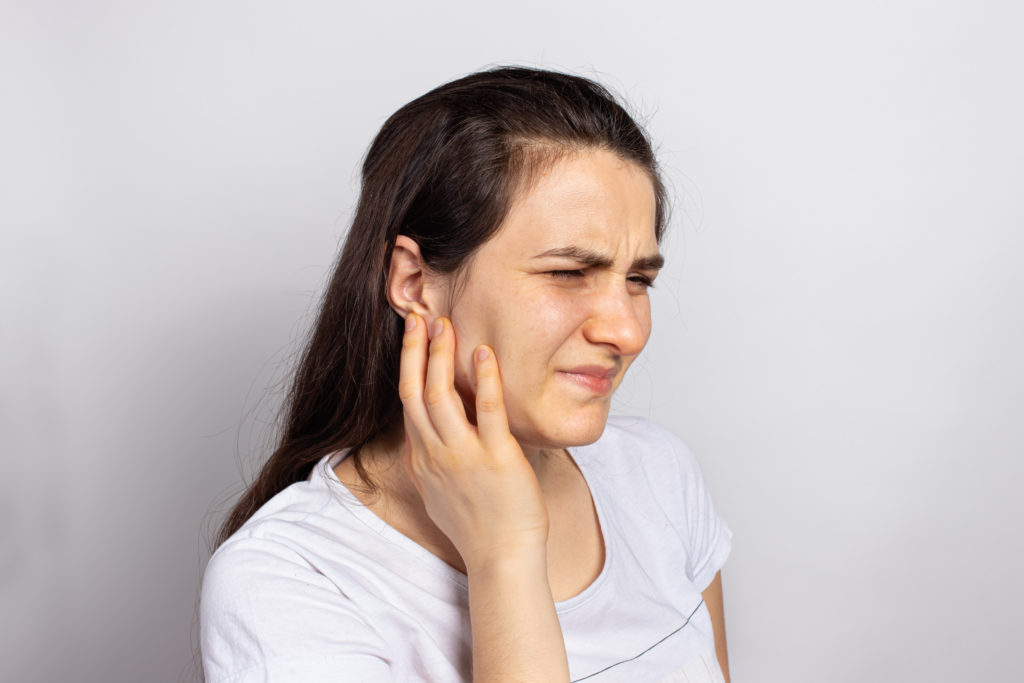
This woman has a sore ear that could be due to infection (inflammation from infection and otitis), perforation or rupture of the eardrum, arthritis of the temporal lower jaw joint, osteoarthritis and/or pain in the jaw, or mastoiditis.

How Therapy May Help

You may have an OMD and still be functional. Therefore, it’s not a problem for you. However, if you have one or more of the symptoms listed above and it’s negatively impacting your health or day to day activities, it may be beneficial to get evaluated by a speech-language pathologist who has specialized training in assessing and treating OMDs. Speech pathologist’s often work with a team of other professionals including: allergists, ENTs, orthodontists, physical therapists, and even oral surgeons, or plastic surgeons if necessary. This is to address all of the underlying weaknesses and structural issues that may be affecting your swallowing/speech patterns. Once any underlying issues that may be affecting breathing or tongue placement have been remedied, a speech pathologist can work with you to acquire new orofacial myofunctional skills and strategies.

If you have any questions about OMDs feel free to reach out to one of the OMD trained speech pathologists at MOSAIC Health & Rehab at 406-388-4988. For more information on this topic, check out our earlier blog post Oromyofunctional Disorders: What Exactly Are They?

Why is it Important for Babies to Mouth?

Have you ever noticed a baby with their hands in their mouth? Babies are learning to explore through the hand-to-mouth connection. Mouthing is an important development for babies to learn new sensations in the world, as well as calming oneself. There are different mouthing learning periods, lasting to 2 years and beyond. Let’s explore why it is important for babies to mouth, the learning periods, as well as how to support a baby in each stage.

Generalized Mouthing Period (Birth to 4-5 Months of Age)

At birth, babies show a rooting reflex where your baby’s mouth searches for the touch near the mouth with small side-to-side head movements. As a baby grows, decreased rooting reflex emerges when items touch a baby’s mouth. This is the generalized mouthing period. Sensations of soft and firm are being explored. Around 2 months of age, a baby will begin to bring hands to mouth while laying on back or belly. Then, around 3 months of age, a baby will begin to grasp a toy and bring to mouth, suckling. Lastly, between 4-6 months, the biting reflex increases, and the gag reflex is coming under control.

Many changes to a baby’s facial structure happen in the first mouthing period, from jaw growth to the space between a baby’s nasal area and mouth increasing. It is important for a parent to support the baby’s sucking and suckling of hands and safe, appropriate toys to prepare the transition to discriminative mouth period.

Discriminative Mouthing Period (5-6 Months to 9 Months of Age)

Discriminative mouthing is very important for a baby’s development. In this period, a baby will move items within the mouth to explore, learning of tastes, temperatures, sizes, and textures. Biting, chewing, and tongue movement is also explored using safe toys, fingers, and foods. This promotes development of the jaw and teeth to emerge, as well as providing more developmentally appropriate methods for the baby to calm oneself. It is recommended to wean off the pacifier after 6 months of age as extended use of a pacifier can be detrimental to overall facial development. Subjectively, babies who skip or have little time in the discriminative mouthing period have greater difficulty in developing feeding and speech skills.

The Beginning of True Mouth Play (9 Months to 12 Months of Age)

More mature and precise biting, chewing, and manipulation of toys within the mouth occur. Desired diagonal rotary chewing and jaw movements is emerging. Babies will have less mouthing and more intention in using the mouth appropriately with toys. Therefore, to help, a parent can support these skills with supervised horn blowing and bubbles.

True Mouth Play (12 Months to 24+ Months of Age)

Babes achieve many skills in this stage. Respiration is maturing, and babies use lips and cheeks together to shape for straw drinking and horn activities. The tongue thrust swallow is decreasing, and the jaw and tongue learn to move independently of one another. By now, chewing, open cup drinking, or straw drinking have replaced sucking for calming.

However, it is important to remember these are not rigid timelines. We recommend parents support the child no matter what stage the child is within. The following are item suggestions for each period:

  • Generalized Mouth – Baby’s own hand, parent’s finger, rounded teethers, easy to grab teething toy balls
  • Discriminative Mouthing – Elongated teething toys made to isolate the molar area (promote chewing), foods cut as “match sticks” to isolate molar area and promote chewing while providing consistent supervision (if foods have been introduced and are going well)
  • Beginning and True Mouth Play – Baby horns, bubbles, and pop tubes all with parent supervision

For more resources, check out MOSAIC’s Patient Education page for a teething toy handout and recommended cups for kids 6 months and up.

Resources
  1. Bahr, D. (2001). Nobody Ever Told Me That! (Or My Mother) (pp. 91-108). Arlington, TX: Sensory World.

Physical Therapy for Your Pelvis

It will surprise nobody to hear that Physical Therapists work with muscles. But we bet a lot of people would be surprised to learn that the muscles inside your pelvis are included. While the pelvic muscles don’t get as much attention as the biceps or hamstrings, they can still cause problems that need treatment. Physical therapy for your pelvis can help. Here are a few examples:

Urinary Incontinence

Urinary incontinence is the involuntary leakage of urine. More than 13 million people in the United States have this issue. There are different types of incontinence, but the most common are stress and urge incontinence.

  • Stress incontinence is when leakage happens during coughing, sneezing, or laughing.
  • Urge incontinence is a result of the bladder being overactive or unstable. People with urge incontinence often often have triggers that cause the involuntary loss of urine, such as hearing running water.

Pelvic Pain

Pelvic pain is as any pain that occurs either internally or externally in the pelvic or genital area. This can affect both men and women, but it’s more common in women.

What’s the Cause?

Issues with the pelvic muscles causes most incontinence – either from weakness or tightness. However, there can be other contributing factors like spasms that cause bladder contractions. Or, conditions like anxiety may increase the urge to empty the bladder.

Causes of pelvic pain usually include either tightness or weakness of the muscles of the pelvic floor. The pelvis is made up of three bones, forming three joints where they meet. These joints need stabilization by an outside force. The job of the muscles and ligaments in and around the pelvis is to  provide that stabilizing force. If the muscles are too tight, the joints will have an excessive amount of compression on them. Too loose, and the joints of the pelvis can experience shear forces. Both conditions result in pelvic pain.

What can Physical therapy do for the Pelvis?

Because incontinence and pelvic pain are usually musculoskeletal conditions, physical therapy can offer a lot of effective treatments. Some examples include:

Exercise – strengthening or stretching of the pelvic muscles or the core can help correct imbalances, improve pelvic stability and reduce pain.

Biofeedback – This involves using sensors placed on the body while doing exercise to help the patient identify which muscle groups are working and bring awareness to areas of tightness or weakness.

Education – For incontinence, learning how the bladder normally functions can help you to understand changes that can be made to improve symptoms. Learning about posture and how to improve alignment of the pelvis and the trunk can help to reduce pain and improve tolerance for positions like sitting and standing.

Manual Therapy – joint mobilizations, trigger point release, soft tissue massage, myofascial release, and other techniques can help improve mobility of the pelvic joints, decrease tone in spastic muscles, and reduce pain. So, if you’re experiencing pelvic problems, a specially trained physical therapist can complete a comprehensive evaluation, help determine the cause, and design a customized treatment plan to help.

References:
  1. Geriatric incontinence – https://pubmed.ncbi.nlm.nih.gov/34519024/
  2. Assess Pelvic Floor Guide – https://pubmed.ncbi.nlm.nih.gov/34807882/
  3. Pediatric pelvic floor – https://pubmed.ncbi.nlm.nih.gov/10458431/
  4. Using PTs for Pelvic floor – https://pubmed.ncbi.nlm.nih.gov/35353916/
  5. Urinary Incontinence prevalence – https://pubmed.ncbi.nlm.nih.gov/35173077/
  6. Physical Therapy Treatment of Pelvic pain – Physical Therapy Treatment of Pelvic Pain – PubMed (nih.gov)
  7. Pelvic floor muscles and training – https://pubmed.ncbi.nlm.nih.gov/35036386/
  8. Exercise in pregnancy (helping incontinence – one of the symptoms – https://pubmed.ncbi.nlm.nih.gov/34478617/

What can Physical Therapy do for Arthritis?

Arthritis is a chronic condition that causes inflammation of the joints. It can cause pain, stiffness, and swelling. The hips, knees, hands, and spine are the most commonly affected joints. It is not a single disease but an umbrella term that includes a variety of different types. Some of the more common examples are osteoarthritis, rheumatoid arthritis, gout, psoriatic arthritis, and ankylosing spondylitis. While physical therapy might not be the first treatment you think of for arthritis, it probably should be.

A lot of people choose to use medication to manage their pain, stop activities that hurt, and wait for things to get bad enough to have a joint replacement. But this isn’t a great plan. All medications have side effects, even over the counter ones. Reducing activity leads to muscle atrophy and even stiffer joints. Even though joint replacement surgery usually has good outcomes, it does come with its own set of risks and a painful recovery.

Physical Therapy Intervention for Arthritis

Physical therapy has been extensively researched as a treatment for arthritis and demonstrates good outcomes. A PT will typically start with exercise as the base for treatment. Exercise helps to regain lost joint motion, decrease feelings of stiffness, and strengthen muscles surrounding the affected joint. These benefits are all somewhat obvious. What surprises many people, is that exercise has been shown to be as effective as medication for pain relief in many types of arthritis. And it has no side effects!

Physical therapy has more to offer people than just exercise though. Education helps people understand their condition, what to expect, and how to manage it. As experts in human movement, physical therapists are especially good at helping people modify the way they perform certain tasks or activities to reduce strain on joints affected by arthritis. They can also suggest ways to modify the environment at work or home to reduce pain and improve function. They may also suggest things like braces, orthotics, or other devices that can help maintain mobility and reduce pain. On top of all of that, PT is also a cost effective treatment option.

With so many techniques that are effective in helping people, physical therapy is a recommended first line treatment for many types of arthritis. Now that you have a better understanding of what PT can do, hopefully you’ll think of PT first when you think of arthritis too.

References
  1. Research (peer-reviewed)
    1. PT for juvenile RA – https://pubmed.ncbi.nlm.nih.gov/1946625/
    2. PT for hip and knee OA – https://pubmed.ncbi.nlm.nih.gov/33034560/
    3. Systematic Review for Juvenile RA – https://pubmed.ncbi.nlm.nih.gov/28729171/
  2. Articles and Content
    1. Effectiveness and Cost-Effectiveness of Physical Therapy for Knee Osteoarthritis-  https://www.rheumatology.org/About-Us/Newsroom/Press-Releases/ID/718
    2. Can physical therapy reduce arthritis pain? – https://www.medicalnewstoday.com/articles/physical-therapy-for-arthritis

Fibromyalgia – What to do When the Fibro Ignites

As we head toward the end of summer, the weather is hot! For the nearly 5 million people in the United States with fibromyalgia, they might experience a different kind of heat – the burning pain that typically comes along with this diagnosis.

What is Fibromyalgia?

Fibromyalgia is a chronic condition that can cause a wide range of symptoms throughout the body. It’s usually diagnosed between the ages of 30 and 50, and 80% to 90% of the people affected are women. One of the most common and debilitating symptoms is burning pain.

Other common symptoms are:

  • Chronic pain all over the body
  • Fatigue
  • Memory problems
  • Sleep disturbances
  • Depression and/or anxiety

How Does Physical Therapy Help?

Because of the wide range of symptoms, fibromyalgia can be a debilitating condition. It is not uncommon for people to begin avoiding activities altogether because of pain and fatigue. This begins a cycle of deconditioning that not only impacts the person’s overall health, but also makes the symptoms of fibromyalgia worse. The cause of fibromyalgia is currently unknown and there is no cure, so physical therapy treatments are designed to reduce and manage the symptoms. This requires a multi-pronged approach.

Physical therapists work to help people with fibromyalgia using several different methods. Despite there still being no cure, when patients work with their medical team and physical therapist, they find relief from symptoms.

Firstly though, it’s important to have a thorough medical exam to rule out other conditions that might be causing or contributing to the symptoms like an infection, Lyme disease, thyroid problems, metabolic disease, or side effects from medication. Therefore, a specialist like rheumatologist can help people with fibromyalgia with medications.

Common Fibromyalgia Treatments Include:

Education

The first step in treating fibromyalgia is often helping people understand what’s going on, and what they can do about it. Research has shown that people who are knowledgeable about their condition have better outcomes, more confidence, and cope better.

Decrease Pain and Improve Range of Motion

Also, physical therapists are movement experts. They use a lot of tools and techniques to help with the pain and stiffness caused by fibromyalgia. A PT might use gentle manual therapy or massage, prescribe specific stretches, or a simple yoga routine. They might also use modalities like electrical stimulation, biofeedback or in states where it is allowed, dry needling.

Exercise

Once patients understand the condition and are able to move a little better with less pain, exercise often enters the treatment picture. Research has shown that low to moderate intensity aerobic exercise like walking, biking, or swimming is important in managing fibromyalgia symptoms. It can help with pain, fatigue, sleep disturbances, depression, and more. Additionally, physical therapists and patients work together to find the right type of exercise and the right intensity to best manage fibromyalgia. However, they often have to start slow, and make adjustments along the way.

Each physical therapy session is tailored to the needs of the patient. Treatment will vary depending on the severity of their symptoms. Despite there still being no cure for fibromyalgia, physical therapists can help. They will help with pain management, strength, mobility, fatigue and function to help patients find relief from their symptoms.

Matthew Effect in Reading

The Matthew Effect follows the well-known adage of the rich get richer and the poor get poorer. As it applies to reading, good readers gain a significant advantage over time because they are better readers. A strong reader enjoys reading and thus reads more. By reading more, they further develop better reading skills. In turn, this encourages them to read more and become even stronger readers. A cycle of success is established. By contrast, weak readers read less because reading is not enjoyable. They become less skilled and remain less skilled. Because of this loop, a skill gap between strong and weak readers exists and widens over time.

Unfortunately, reading less also results in reduced vocabulary, reading fluency, world knowledge, and comprehension. Whereas, fluent frequent reading builds vocabulary, knowledge, and understanding. There appears to be a mutual relationship between reading and vocabulary development. A large vocabulary helps readers understand stories better and comprehension of stories builds vocabulary; a mutually beneficial relationship. Likewise, a reduced vocabulary makes it difficult to understand stories, and limited understanding slows vocabulary development – unfortunately a lose-lose situation.  

There are treatment strategies to reduce this Matthew Effect. A primary strategy is to increase a struggling reader’s phonemic awareness. That is, their ability to hear and manipulate speech sounds in words. Kids will then apply this skill to reading and spelling. At MOSAIC Health & Rehab, we provide direct explicit instruction in phonemic knowledge upon which we build reading and writing skills. Call today to schedule an appointment for your child.