
Balance Development in Kids: 3 and Beyond
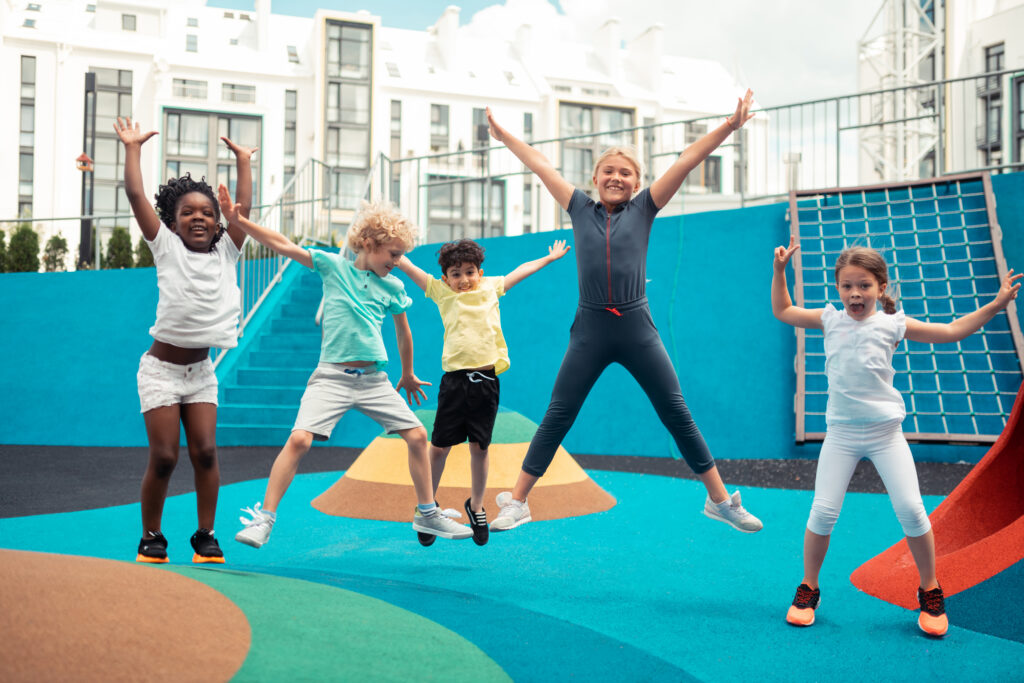
In the first part of our balance development in kids series, we explored how babies and toddlers build the foundation for balance through head control, sitting, crawling, standing, and early walking. By age 3, many children are ready to use those foundational skills during faster, more complex movements—but balance development in kids continues and becomes more refined throughout childhood.
From navigating playground equipment to hopping, riding a bike, and participating in sports, balance plays an important role in how children move, play, and build confidence. In this second part of our series, we will look at how balance skills typically develop from age 3 through the school years, activities families can try at home, and signs that a child may benefit from a pediatric physical therapy evaluation.
Ages 3 to 5: Developing Single-Leg and Dynamic Balance
Preschoolers begin using balance for more coordinated and purposeful movement. Their posture becomes more controlled, their reactions become faster, and they can often adjust their bodies before they lose their balance.
Developing skills may include:
- Walking along a narrow line
- Standing briefly on one foot
- Hopping
- Jumping forward or down
- Catching and kicking balls
- Pedaling and steering a tricycle
- Climbing ladders and playground structures
- Moving through simple obstacle courses
- Beginning to skip or gallop
The CDC lists catching a large ball most of the time as a movement milestone by age 4 and hopping on one foot as a milestone by age 5.
At this age, balance also becomes closely connected to confidence. A child who feels steady may be more willing to try playground equipment, join movement games, or explore unfamiliar activities.
School Age: Refining Balance for Complex Movement
Balance continues developing well beyond the preschool years. School-age children become better at controlling their bodies while moving quickly, responding to other people, watching a ball, carrying an object, or making decisions at the same time.
These more advanced skills support:
- Riding a bicycle or scooter
- Skipping with rhythm
- Running and changing direction
- Landing after a jump
- Walking on narrow or uneven surfaces
- Throwing or catching while moving
- Participating in sports
- Maintaining balance when bumped
- Moving safely in busy environments
As children grow, the brain becomes more efficient at deciding which sensory information to trust. A child may rely on vision in one situation but need more information from the feet, joints, and inner ear in another. This process continues to mature throughout childhood.
Balance Activities for Kids
Balance practice does not need to feel like an exercise program. Many of the best opportunities happen through ordinary play.
- Create Stepping Stones – Use flat floor markers, pieces of paper, or secured nonslip spots as pretend stepping stones. Ask your child to step from one to the next without touching the space between them. Change the distance or direction of the markers to make the activity easier or harder.
- Play Freeze Games – Freeze dance, Red Light–Green Light, and Simon Says help children practice starting, stopping, changing direction, and holding a position. These games combine balance with listening, motor planning, and body control.
- Practice Single-Leg Play – Instead of simply asking a child to stand on one foot, make it part of a game. Keep a stable surface nearby when needed. A child can:
- Pretend to be a flamingo
- Place one foot on a ball
- Step over a toy
- Tap different floor markers
- Put on pants while standing with support
- Kick a stationary ball toward a target
- Add Ball Play – Rolling, throwing, catching, and kicking require children to shift their weight and adjust their posture. Start with a large, lightweight ball. A larger ball moves more slowly and is often easier for young children to track and catch.
- Build an Obstacle Course – Obstacle courses can be changed frequently to keep the activity interesting. Use safe household items to create a course that includes:
- Crawling under something
- Stepping over a low object
- Walking around cones
- Moving between floor markers
- Tossing a toy into a basket
- Stopping in a designated spot
- Explore Outdoor Surfaces – Grass, sand, hills, playgrounds, logs, gravel paths, and packed snow provide different types of balance challenges. Outdoor play gives children opportunities to adjust their posture and foot placement in ways that smooth indoor floors do not. Stay close, choose safe environments, and match the challenge to your child’s current abilities.
How to Make Balance Activities Easier or Harder
A balance activity should be challenging enough to require effort but not so difficult that the child becomes frightened or frustrated.
To make an activity easier:
- Widen the path or space between the feet
- Allow the child to hold a hand or stable surface
- Slow the activity down
- Use a firm, level surface
- Reduce the number of steps
- Demonstrate the movement first
To increase the challenge:
- Narrow the path
- Add reaching or throwing
- Change speed or direction
- Carry a lightweight object
- Add a turn
- Use a slightly less predictable surface
- Combine two familiar movements
Balance activities should be supervised and completed in a clear area away from sharp furniture, stairs, and elevated surfaces. Stop the activity if the child experiences pain, dizziness, nausea, or unusual fatigue.
Frequently Asked Questions About Balance Development in Kids
Is it normal for toddlers to fall frequently?
Some falling is expected while toddlers learn to walk, run, turn, and navigate obstacles. Over time, families should see improved control and fewer falls. An evaluation may be helpful when falls are unusually frequent, worsening, associated with dizziness or pain, or limiting the child’s participation.
At what age should a child have good balance?
There is no single age when balance is “finished.” Balance begins developing during infancy and continues becoming more refined throughout childhood. Early skills include sitting and walking, while later skills include hopping, skipping, biking, navigating uneven surfaces, and maintaining control during sports.
Can balance improve with practice?
Many balance skills improve when children have regular opportunities to move, climb, jump, reach, and explore different environments. When an underlying strength, mobility, sensory, vestibular, coordination, or medical issue is affecting balance, individualized pediatric physical therapy may provide more targeted support.
Does poor balance always indicate a medical condition?
No. A child may temporarily appear unsteady while learning a new skill, growing quickly, or adjusting to an unfamiliar environment. Persistent, worsening, asymmetrical, or function-limiting balance problems deserve closer attention, especially when they occur with delayed milestones, pain, dizziness, or loss of previously acquired skills.
Balance continues to develop throughout childhood as kids take on more complex movements at home, on the playground, and in sports. Regular opportunities to climb, jump, run, and play can help build these skills, but if balance challenges are frequent or limit participation, a pediatric physical therapy evaluation can provide helpful guidance and support.