
Why Sequencing is Important

What is sequencing, and why is it important? We use sequencing as a part of our daily routine. It involves ordering events based on their chronological timeline. Essentially, these are the steps that we use to complete a task (e.g., hand washing or following a recipe). For example:

Washing Hands:

  1. Wet hands
  2. Put soap on hands
  3. Lather hands with soap and water
  4. Dry hands with towel

While this may seem fairly straight forward to most, several individuals with developmental delays and/or young learners experience difficulty with sequencing. As a result, they may need explicit instruction on how to complete a routine.

Why is it Important?

The ability to sequence tasks and understand information in a chronological manner is critical to development of literacy skills. Target literacy skills include: the ability to identify the beginning, middle, and end of a story, making a prediction for “what will happen next?’ in the story, and retelling or summarizing a story in a sequential manner.

The most basic level of sequencing exists in functional routines (e.g., washing hands or getting ready for school/work). Most individuals acquire a rote means of completing a functional routine without needing to reference a picture or visual. However, the development of these skills evolves from functional routines to higher-level language functions including:

  • Understanding cause and effect
  • Following multiple step directions
  • Narrative skill development
  • Understanding and using transition words (e.g., “first, second, then, next, last, finally)
  • Reading and writing
  • Learning schedules and creating them
  • Organizing information
  • Time management skill development

Sequencing skills are targeted throughout nearly every level of the school-aged (i.e., kindergarten through 12th grade) academic curriculum. A strong foundation for the above higher-level language functions is essential for understanding and using information covered throughout the curriculum.

How is Sequencing Taught?

Therapists often implement picture cards to teach or improve sequencing abilities. This includes a picture representation of each step in order to complete a task. Once the learner can sequence a task using the pictures, the visuals are often removed. Instruction remains ongoing until the person can complete the task independently.

Sequencing or picture cards can be used not only in speech therapy, but across other therapies, at school, or at home. Not all sequencing cards come in picture form. Higher level learners who have developed reading skills may benefit from text cards. A great example of this is a recipe card. Aside from sequencing cards, graphic organizers or timelines are also used to target sequencing skills.

If you have concerns about your child’s ability to sequence and complete tasks, call MOSAIC today to schedule an evaluation with one of our speech therapists.
Social Emotional Learning

There is a lot of talk in the world today about Social Emotional Learning or SEL, as well as social topics. We also see and hear from clients daily about their child’s behavior and the idea of the iceberg analogy when speaking about behavior. Here is an occupational therapist’s perspective about this topic.

Occupational therapy has always considered social emotional learning or emotional regulation skills in the work provided. It typically comes from a sensory processing viewpoint. Behavior is often treated with external methods and teaching to address both wanted and unwanted behaviors in children.

Social Emotional Learning Perspectives

Occupational therapists may choose to view social emotional learning from a psychosocial development perspective and use psychology and neurocognitive development to guide treatment approaches. This begins by meeting the child where they are in their development. This is where the iceberg analogy comes into play. An OT’s job is to look at the outward function of the child. Then they look below the surface to the possible reasons or causes leading to a disruption or difficulty experienced in the function.

The OT will look into how the child is learning, the environment, and their experiences in learning. OTs consider the foundation of their development. Looking into how the child feels and perceives their world helps in developing a treatment plan. Is the child experiencing the world from a heightened or depressed sensory world? How are they experiencing internal needs/desires? Does the child have strengths or weaknesses in cognitive learning? How can we help a child understand their role and purpose in situations? Social Emotional Learning models discuss self-awareness, self-management, and relationships.

How to Support These Areas

Self-awareness involves an understanding of self and how one feels about self. Is the child able to make the leaps that us adults and parents desire? Can the child learn and accept themselves individually? Once a child learns about emotions and feelings, they then can be more expected to flexibly change and be responsible for their behavior. This is less about teaching emotion and more about learning about individual emotions and how that sits in a person. It includes being uncomfortable and comfortable and observing that this is flexible. Self-awareness is a great foundational tool for cognitive development. In order to be able to form successful pathways and support emotional regulation, we need supportive self-awareness that is child led and then met from an adult.

Once self-awareness skills start emerging, self-management learning can begin. Again, using a development framework versus a specific behavior problem-solving framework works best here. Is the child able to make the best choices in situations based on their development and their awareness abilities? Using skills to support this learning is definitely needed. It is the first approach to looking at emotional regulation, also known as behavior. When behaviors are extensive and extreme, alternate approaches are also used but in conjunction with the first approach. As this learning develops, more support to relationships is introduced. Self-management draws on and allows for further cognitive development leading to what is sometimes coined as emotional intelligence.

From the get go, humans connect and need relationships.

Most of the children we see have difficulties forming and maintaining friendships. When approached with this difficulty, we draw on foundational skills. We work towards improving a child’s interactions in a variety of social situations. This includes working on friendships but mostly working on social perspective taking. How can a child use their individual strengths and weaknesses to be successful in relationships? Typically at this stage the child shows more integrated cognitive abilities. They are ready to meet age-expected challenges with improved performance.

OT is a great option for supporting, improving, and promoting social emotional learning. We use a variety of individually based activities and learning approaches to achieve outcomes for children and families. We have the knowledge to provide support to all children with or without specific mental health challenges. A mental health tier model can also guide interventions.

In addition, OTs have training in how to promote such learning in children with all levels of function. The framework discussed and a neurodiversity approach to intervention can be successful when working with children with autism. This framework is useful for children who struggle with learning. It is also useful with kids who have experienced a neurological trauma. Counseling may be beneficial in addition to OT. It is important to acknowledge that both have a purpose and place in working with children. OT is typically a more physically active treatment. It includes additional support for meeting functional outcomes with daily life activities and routines.

If you are seeking more information, MOSAIC’s occupational therapists can help. You can also check out the Mindsight Institute and a guhttps://mosaicrehabmt.com/pediatric-occupational-therapy/ide on how Occupational Therapists can promote mental health.

Handwriting Practice

Is your child struggling to practice their handwriting skills because sitting down to write letters is just too boring? Well, we have some tips to encourage handwriting practice! One of the best ways to encourage handwriting practice is with board games.

Tips for Handwriting Practice

One favorite happens to be the game “Guess Who?”.  You can play this game in a more non-traditional manner encouraging children to write their questions instead of say them. Pretend as if you’ve “lost your voice” for the entirety of the game. The child then has to work on formation, orientation, spacing, and punctuation while writing out their questions. For example, instead of saying “Does your character have red hair?” the child has to write this question and show to their partner.

Does your child love to color and draw pictures? To encourage further learning, encourage the child to illustrate and write a book. Have your child draw a picture at the top, color, and label the parts. Then have them write one to two sentences on each page, creating a story! Laminate and bind to store for memories or to read during bedtime routines.

Are you familiar with the game “Spot It”? Turn this game into a “silent game” just like “Guess Who?”. Instead of having kids yell out their answers, be the first to write down the answer and then slap the cards. This will encourage speed and efficiency of handwriting. You can even have your child re-write their responses to work on accuracy and formation of their written responses.

Does your family often play scrabble or Bananagrams? If you haven’t guessed yet, make it a handwriting game! After scoring and counting up the points for each turn, have your child write their words on their lined paper to earn additional points. Encourage accuracy of letter formation but give bonus points for letters written correctly on the first try!

Handwriting can be a difficult and mundane task to practice. If you can implement these games and strategies into your weekly family routines, it may make the fight to practice writing less dreadful. Good luck and happy writing! You can also find toys that will help with pencil grasp and writing here.

School’s Out Summer Activities

School is out and summer fun is here. Many times, along with the fun comes the familiar “I’m bored”. “I’m bored!” is an announcement by kids all parents despise. As the parent, or caretaker, we can only see all the toys and different things kids have or can do. Unfortunately, pointing those things out rarely helps. Whether it is difficult for us to believe or whether they are actually bored or not; the problem is the complaint of I’m bored. It needs to be solved. You need school’s out summer activities.

School’s Out Summer Activities

It has been a challenging year for kids and parents alike, so perhaps this is the perfect time to get imagination and creativity rolling. There are so many common household items that can be turned into fun games and activities. Many require little to no additional help once you set up the materials. However, as parents, this is a perfect opportunity to spend time with your child. While completing the activity you are also helping build skills as well as creating memories!

Paper Plate Activities

  • Frisbee: try to throw it back and forth like a Frisbee – motor planning
  • Mask: cut out 2 holes for eyes and draw happy, sad, or silly faces on the front and hold it over your face – visual, pretend
  • Shield: use as a shield for your paper towel roll sword – pretend
  • Lily Pads: lie several plates in a path on the floor and hop from one to the other – pretend, gross motor, coordination
  • Tambourine: staple 2 plates together with dry beans or rice in the middle. Shake to music – fine motor, auditory
  • Paper Shoes: stand on paper plates and slide across wood floor or tile – proprioception, motor planning. Add hole punches on each side of the plate and have children string laces and tie – fine motor, sequencing, motor planning

Paper Towel Roll Activities

  • Eye Spy: when spying for the object, use the paper towel roll like binoculars or a telescope – visual, cognitive
  • Telephone: whisper silly phrases to each other through the paper towel roll – auditorycognitive
  • Sword Fighting: use the paper towel roll as a sword – motor planning, gross motor coordination, pretend. Add decorating with stickers, coloring or painting – fine motor
  • Noise Maker: tape one end closed and fill half way with rice or beans, then tape the other end closed and shake – motor planning, auditory
  • Paper People: use paper towel rolls for arms and legs, paper plate for head and body. Tie together with pipe cleaner, color and decorate – sequencing, fine motor, cognitive
  • Bracelets: cut into smaller pieces and make bracelets. You can decorate them with markers, beads, or glitter – motor planning, pretend, fine motor
  • Stamp: dip one end in paint and use as a ‘circle stamp’ on paper – visual, motor planning

 Empty Box

  • Drum: flip the box over and pound on it with your hands or with sticks – proprioception, motor planning, auditory
  • Driving: pretend it is a car and push it around or get in it and pretend to drive it – motor planning, pretend
  • Knock-Knock Game: draw some squares for windows and a rectangle for a door and pretend it’s a house or cut out the windows/door – motor planning, pretend
  • Bean Bag Toss or Basketball: try tossing various items, such as bean bags or plastic balls, into the box from a short distance – motor planning, gross motor, coordination
  • Mailbox: cut a slot in the box and parent/child can be mailman and deliver mail. Child/parent can write real or pretend letters – pretend, fine motor, cognitive
  • Dog House: draw paw prints all over the box and cut some holds in the sides. Place stuffed animals inside or invite your dog to sit in the house with you – pretend, fine motor

 School’s Out Empty Water/Pop Bottles Summer Activities

  • Stacking: take turns stacking them on top of each other and see how many you get until they topple over – visual, motor planning
  • Bowling: line up empty bottles and roll a ball into them – motor planning, cognitive, visual
  • Fill and Pour:  fill with water, rice, sand, etc. and pour into different containers or on hands/feet – fine motor, tactile
  • Drumming: use bottles as “drum sticks”. Imitate rhythm, drum to music, drum different places to hear different noise – auditory, pretend
  • Noise Makers: fill with rice or dry beans and shake! Listen to the different sounds various fillers make – auditory, motor planning
  • I Spy: fill with rice and add tiny items (beads, coins, pebbles) and then shake it up and try to find all of the ‘hidden items’ fine motor, visual
  • Volcano: put a little baking soda in the bottle and then some vinegar until it starts to fizz and bubble up (do this outside or over the sink). Put small plastic characters in the bottle and see if the volcano pushes them out – visual, pretend
  • Vase: decorate a piece of paper and tape or glue it onto an empty bottle. Then pick some wild flowers and put them inside with some water – fine motor

Blanket/Sheet

  • Tug-o-war: sit or stand across from each other and tug back and forth – proprioception, motor planning
  • Parachute: with 2-6 people, hold a section of the blanket and float it up into the air and back down – visual, motor planning
  • Blanket ride: fold the blanket in half and sit on one end while another person pulls it – proprioception, gross motor
  • Ghost: put the sheet over your head and make a Oooo sound as you walk around the room – pretend, visual
  • Cocoon: roll someone up in the blanket (with their face uncovered) – proprioception, self regulation
  • Fort: drape over a table or other furniture to create a small hideaway and pretend you are in a cave, underwater, etc. – pretend
  • Hammock: have child lie in blanket while 2 adults grab the ends and gently swings back and forth – vestibular, self-regulation

School’s Out Sock Summer activities

  • Make a Hand Puppet: draw eyes with marker and make the puppet talk, kiss, burp, etc. – pretend play
  • Bean Bag Toss: fill socks up with beans or rice and use it like a bean bag – motor planning, coordination
  • Calming Aid: fill it up with rice and microwave for 30 seconds (or just until warm) – tactile, self regulation
  • Guess What’s Inside:  Put small items inside sock and have child feel and guess what is inside, take turns guessing! – proprioception, cognitive

Quick Definitions

You may be reading this and thinking, I am not sure what some of these things are…proprioception, vestibular, self regulation?? Below are some quick definitions to help clarify some terms that may not be familiar and show how the activity goes well beyond just the play and finished project.

  • Sensory: Engaging one or more of the 8 senses (auditory, visual, olfactory, gustatory, touch, proprioceptive, vestibular, interoception)
  • Vestibular: The ability to detect changes in head position related to balance and knowing where your body is in space, etc.
  • Proprioception: Input to and awareness of position of joints, muscles, and tendons related to the amount of effort needed to move, play, etc.
  • Sequencing: The ability to complete a task or activity involving 2 or more steps.
  • Self regulation: A child’s ability to calm oneself after a period of distress, excitement, etc.

The above information was taken from the Play Project. This is a great resource for children with special needs as well as typically developing children. Pinterest is another easy source to find fun and simple activities for kids of all ages and abilities. Or check out Summertime S’mores and Summer Activities for more fun school’s out summer activities.

Summertime is a wonderful time to explore these activities and create new ones! Do not let the “I’m bored” or “there’s nothing to do” get you down. There are so many fun activities just waiting for you to create them by simply looking around your home. Now, let the school’s out summer activities begin!

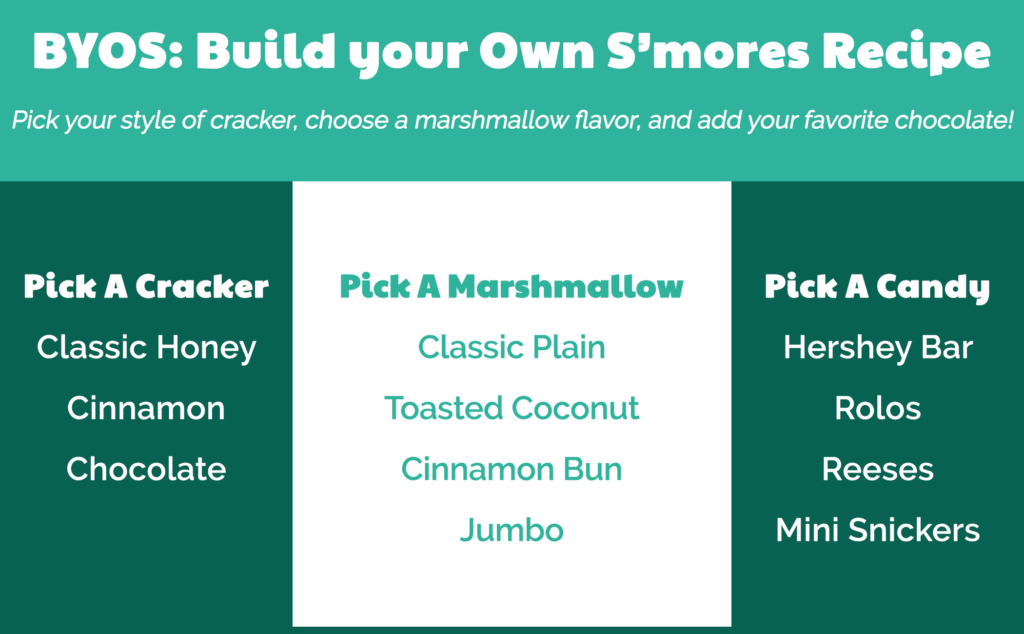
Summertime S’mores Making!- OT style

Believe it or not, a weekend camping in the mountains has so much to do with occupational therapy skills. Especially when we bring the age old favorite dessert: S’mores! A camping adventure for your kids can provide many opportunities for executive functioning, fine motor, and sensory experiences. Grab your tent, summertime s’mores supplies, sleeping bags, and sunscreen to prepare for an awesome learning opportunity in the woods!

How can all of these skills be incorporated into such a simple activity?

Your therapists at MOSAIC are here to share all the secrets! You’ve survived the dreaded packing sequence, loading the kids up, and the drive to your favorite camp spot. As you pull up, you hear one of the kids shout, “MOM/DAD LET’S MAKE S’MORES.”

Bingo, the perfect opportunity to introduce some activities for therapeutic skills.

Your kids have gathered firewood, they’ve reached into the food box to gather the supplies, and now just need the fire started. In a few simple steps of gathering supplies, the kids have unknowingly used their automatic executive functioning skills! A big word simply meaning that your kids were able to think of the supplies they needed independently and initiate the steps to create their favorite summertime s’mores snack. Without skipping a beat, they knew to unwrap the graham cracker first, place the chocolate on the cracker, and then roast the marshmallow. This is a multiple step sequence of skills completed independently by your child. While things may have been messy at times, and your child may have dropped their chocolate in the dirt, they had the cognitive flexibility to fix the problem and keep the assembly of their chocolate treat moving!

So where does fine motor fall into summertime s’mores making?

The kids have reluctantly sat down at the fire and are ready to make a s’more! They’ve collected the bag with marshmallows, graham crackers, and chocolate. To open the bags, your kids must have the finger coordination and finger strength to rip down the side without spilling all of the pieces on to the ground. Then the assembly! Your child may unknowingly use a variety of grasps to manipulate the graham cracker and chocolate. An OT often calls these a lateral pinch, a three jaw chuck, or a pincer. Your child will also have to pull the marshmallow off the s’more stick without crushing the perfectly golden (or burnt!) marshmallow. This is called grading pressure. Your child’s brain was able to tell their fingers not to pinch too hard.

Okay, reality hits, and your child has struggled to get the whole marshmallow off of the roasting stick. It’s now flat and oozing, and the sticky marshmallow is all over their hands. They abandon the task at hand and immediately seek out a washcloth to clean their hands. We have now collided with sensory processing! Your child was able to sense the uncomfortable feeling on their hands but struggles to tolerate the sticky marshmallow. While most people don’t enjoy sticky marshmallows on their hands, the ability to recognize the uncomfortable feeling and problem-solve how to clean it, is a great example of your child’s regulation skills!

Your occupational therapist at MOSAIC can help break down nearly every skill. This can help you understand why your child may be having difficulties with simple, everyday tasks such as making a s’more.

Even if you aren’t camping, you can make “summertime quarantine s’mores” at home. Additionally, for more fun summer activities, check out our Summer Activities to Fend off Boredom.

Summer Activities to Fend off Boredom

With summer’s arrival comes advertisements for all the latest fun water and outdoor toys. Many of them are great options to promote development of language, fine and gross motor skills, as well as social interactions and independence. As much fun as it for children to pick the most eye-catching item in the store aisle, making thoughtful purchases of new toys and activities at the beginning of summer means you’re more likely to get longevity and repeat play opportunities for months to come. There’s nothing worse than buying a new set of toys only for them to be “old news” in a week or two.

Additionally, many toy options are great across a variety of ages – meaning less purchases for you and more simplicity across siblings. So, here are some easy to find, simple items to get you started on creative summer fun:

Water Table

  • Offers sensory exploration and imaginative play opportunities
  • Simple vocabulary opportunities such as: up, down, splash, on, off, cold, hot, my turn. Throw in some water beads for added fun!

Summer Sidewalk Chalk Activities

  • Make your own sidewalk chalk with crafty kids
  • Offers sensory play opportunities such as turn taking and imaginative play
  • Play games with chalk, such as tic tac toe, or give each other directions to make a special creation
  • Get creative with surfaces – chalk doesn’t need to stay on the sidewalk. Explore coloring your fence, on paper, on rocks, or tracing shadows

Bubbles

  • Easy and inexpensive at most stores or make your own from home
  • Early vocabulary opportunities: pop, mine, more, up, down, blow, big, little
  • Easily provides turn taking and social routines

Hoola Hoops

  • Gross motor: have a competition, jump through a row of them, use as a jump rope substitute
  • Throw bean bags or colored water balloons for turn taking and game play
  • Turn a hoop into a craft by adding string, lights, or treasures from around the yard. Tying and cutting are great fine motor tasks!

Summer Activities with Spray bottles

There are more activities with this simple Dollar Store item than you’d think! Spray bottles are great for grip strength, motor planning, and fine motor development.

  • Knock over animals or army men.
  • Have a water fight.
  • Stack and crash plastic cup towers.
  • Fill with colored water and spray water targets to make a picture.
  • Race to clean off the chalk from the fences

Don’t limit your summer experience because of your budget, storage space, or ability to shop frequently. In addition, many of these activities can be taken from your front porch to the backyard and even to the park. We know that summer time looks a little different still, but the fun doesn’t have to stop. Consider going simple and allowing your child’s imagination to bloom! Additionally, for more summer activities, check out our Summer Scavenger Hunts.